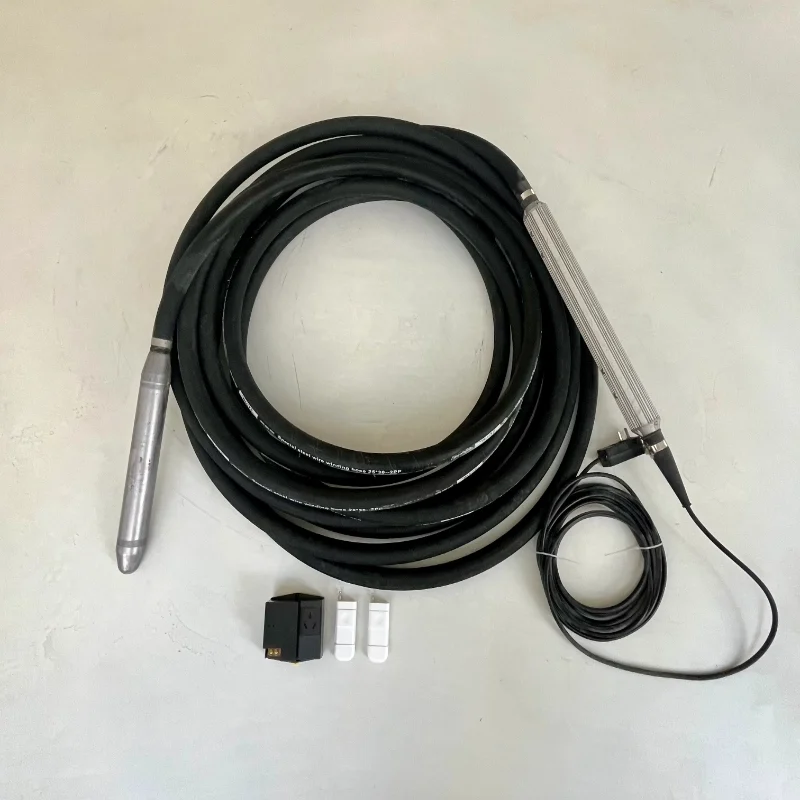
Why Is Motor-in-head Vibrator Becoming a New Choice for Modern Concrete Construction?
Release time: 2026-07-08
Table of Contents
Introduction
Concrete vibration plays an essential role in modern construction by improving concrete density, reducing internal voids, and enhancing the overall quality of finished structures. As construction projects become more complex and require higher efficiency, contractors are looking for equipment that can provide stable performance while reducing operation and maintenance challenges.
Traditional concrete vibration systems have been widely used for many years, but changes in construction requirements have encouraged the development of new equipment designs. The Motor-in-head Vibrator is becoming an increasingly popular solution because it changes the way vibration power is generated and delivered.
By integrating the motor directly into the vibration head, this technology offers a different approach to concrete consolidation and provides new possibilities for improving construction efficiency and equipment reliability. ONNEW develops Motor-in-head Vibrator solutions that combine this integrated design with practical construction requirements, helping contractors achieve more stable vibration performance in different application environments.

The Changing Requirements of Modern Concrete Construction
The expectations for concrete construction have continued to increase. Today, contractors need not only strong and durable structures but also more efficient working processes.
In large construction projects, every stage of concrete placement can affect the final quality. Inconsistent vibration may result in air pockets, uneven density, or surface defects, which can influence the durability of concrete structures.
At the same time, construction companies are paying more attention to equipment efficiency. Machinery that is easier to operate, requires less maintenance, and can maintain stable performance during long working periods has become increasingly valuable.
These changing requirements are driving the development of more advanced concrete equipment and encouraging the adoption of improved Concrete Vibration Technology.
Limitations of Traditional Concrete Vibrator Designs
Traditional concrete vibrators usually use a separate motor connected to the vibration head through a flexible shaft. This design has supported many construction applications over the years and remains widely used in the industry.
However, as project requirements become more demanding, some limitations of traditional structures have become more noticeable.
The power generated by the motor must travel through additional transmission components before reaching the vibration head. During continuous operation, these components may experience mechanical wear, which can increase maintenance requirements over time.
In addition, the separated structure of traditional systems may make equipment handling more complicated. For projects that require frequent movement between different working areas, a more integrated design can provide greater convenience and flexibility.
These challenges have encouraged manufacturers to explore new approaches to concrete vibration equipment.
How Motor-in-head Vibrator Changes Concrete Vibration Technology
The main difference between a traditional concrete vibrator and a Motor-in-head Vibrator is the location of the motor.
Instead of placing the motor outside the vibration head and transferring power through a flexible shaft, Motor-in-head technology integrates the motor directly into the vibration head. This structural change allows vibration to be generated closer to the point where it is applied to the concrete.
With fewer transmission components involved, the vibration process becomes more direct and the overall equipment structure becomes more compact. This design can help improve operating convenience while maintaining stable vibration performance during concrete consolidation.
As an Advanced Concrete Vibrator solution, Motor-in-head technology represents a shift from traditional mechanical transmission systems toward more integrated and efficient equipment designs.
Why Are Contractors Paying More Attention to Motor-in-head Vibrator?
The growing interest in Motor-in-head Vibrators comes from the practical needs of modern construction projects.
For contractors, equipment performance is closely connected with project efficiency. A vibration system that is easier to handle and provides consistent operation can help workers complete concrete consolidation tasks more effectively.
Another important factor is maintenance. Construction equipment often operates in demanding environments, and reducing unnecessary maintenance can help improve project continuity. A simplified structure with fewer transmission parts may reduce potential wear points and support more reliable long-term operation.
Because of these advantages, Motor-in-head Vibrators are gaining attention in applications where efficiency, reliability, and concrete quality are equally important.
Applications of Motor-in-head Vibrator in Modern Construction
Motor-in-head Vibrator technology can support a wide range of concrete applications.
In building construction, reliable vibration is necessary to achieve proper concrete compaction in foundations, columns, walls, and other structural components. Consistent vibration helps improve concrete density and reduce quality issues caused by insufficient consolidation.
In precast concrete manufacturing, production processes require stable and repeatable results. Advanced vibration equipment can help manufacturers improve the consistency of concrete components and maintain higher production standards.
For infrastructure projects such as bridges, tunnels, and other large-scale structures, equipment reliability is especially important due to long working periods and strict quality requirements.
The Role of Motor-in-head Vibrator in Concrete Consolidation
Concrete consolidation is a key factor in determining the performance of finished structures. During concrete pouring, trapped air needs to be removed effectively to achieve better density and strength.
Poor vibration methods may cause problems such as internal voids, uneven concrete distribution, and reduced surface quality. Therefore, choosing suitable Concrete Consolidation Equipment is an important consideration for contractors.
The integrated design of Motor-in-head Vibrators provides a more advanced option for improving the efficiency and stability of concrete vibration. By combining improved equipment structure with modern vibration technology, this solution helps meet the increasing demands of today’s construction industry.
ONNEW’s Approach to Motor-in-head Concrete Vibration Solutions
ONNEW focuses on developing intelligent concrete vibration equipment designed around the practical needs of modern construction. The company’s Motor-in-head Vibrators adopt an integrated structure that combines the motor and vibration head into one unit, helping simplify equipment design while improving vibration efficiency.
Compared with traditional vibration systems, ONNEW’s approach provides a more compact solution that is easier to operate on different job sites. The equipment is designed to support stable concrete consolidation performance while helping contractors reduce maintenance pressure during long-term use.
Through continuous development of Concrete Vibration Technology, ONNEW provides advanced solutions for construction companies seeking more efficient and reliable concrete vibration equipment.
FAQ
What is a Motor-in-head Vibrator?
A Motor-in-head Vibrator is a concrete vibration device that places the motor directly inside the vibration head. Unlike traditional systems with external motors and flexible shafts, this design integrates the main components into a more compact structure.
What makes Motor-in-head Vibrator different from traditional concrete vibrators?
The main difference is the motor position and equipment structure. Motor-in-head technology reduces dependence on traditional transmission components and provides a more direct vibration method.
Why is concrete vibration important in construction?
Concrete vibration helps remove trapped air and improves concrete density. Proper vibration can enhance structural quality and reduce problems caused by insufficient consolidation.
Where can Motor-in-head Vibrators be used?
They can be applied in various fields, including building construction, precast concrete production, infrastructure projects, and other applications requiring reliable concrete consolidation.