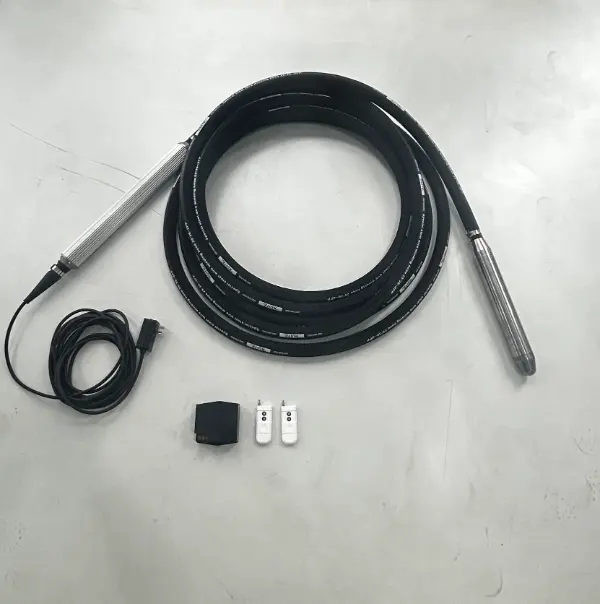
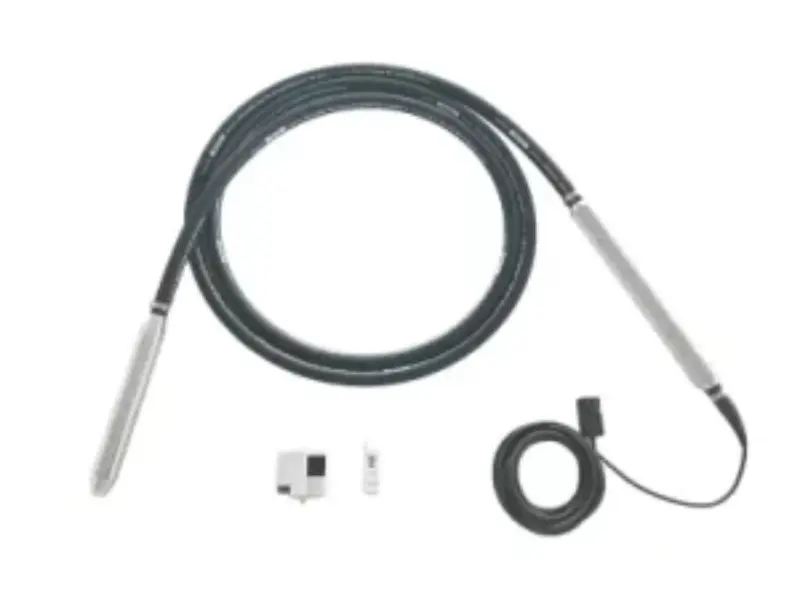
Permanent Magnet Motor Concrete Vibrator: A Smarter Approach to Efficient Concrete Consolidation
Release time: 2026-08-11
Table of Contents
Concrete vibration is an essential part of modern construction. After concrete is poured, trapped air and uneven material distribution can affect the density, strength, and overall quality of the finished structure. For this reason, choosing an appropriate internal vibrator is an important consideration for contractors, concrete producers, and construction equipment buyers.
As construction projects become more demanding, buyers are looking beyond basic vibration performance. They are increasingly concerned about motor efficiency, operating comfort, equipment reliability, maintenance requirements, and labor costs.
With practical experience in concrete vibration equipment development, ONNEW focuses on integrating advanced motor technology with real construction requirements, providing professional vibration solutions for contractors, precast manufacturers, and equipment distributors.

A Permanent Magnet Motor Concrete Vibrator offers a different approach by combining permanent magnet motor technology with an integrated vibration structure. Instead of relying entirely on traditional mechanical transmission methods, this type of vibrator is designed to provide high-frequency vibration in a more compact and efficient configuration.
Why the Motor Design Matters in Concrete Vibration
The motor is one of the most important components of a concrete vibrator because it directly affects how vibration is generated and transferred into fresh concrete.
Conventional systems commonly rely on an external motor and mechanical transmission components to drive the vibrating head. While this arrangement has been widely used, it can introduce additional mechanical components, increase equipment complexity, and create more vibration within the transmission system.
A permanent magnet motor provides another option.
Permanent magnet synchronous motor technology can deliver efficient electromagnetic power generation while allowing the motor to be integrated more closely with the vibrating mechanism. This creates opportunities for a more compact equipment structure and a more direct vibration-generation process.
For contractors, the value of this design is not simply related to the motor itself. A better-integrated drive system can influence equipment handling, operating efficiency, maintenance requirements, and the overall user experience on a busy construction site.
What Is a Permanent Magnet Motor Concrete Vibrator?
A right Permanent Magnet Motor Concrete Vibrator is an internal concrete vibration device that uses a permanent magnet motor to generate the mechanical force required for concrete consolidation.
Unlike conventional configurations that may depend on an external motor and flexible shaft, an integrated permanent magnet motor design places the drive mechanism closer to the vibrating head.
This structure can provide several practical advantages:
- Compact equipment construction;
- Efficient motor operation;
- High-frequency vibration;
- Reduced dependence on traditional flexible-shaft transmission;
- Easier handling during concrete placement;
- Lower mechanical transmission losses;
- Improved operator comfort;
- Reduced maintenance requirements.
The exact benefits depend on the equipment design and working conditions, but the underlying objective is the same: deliver stable vibration to fresh concrete while making the equipment easier and more efficient to use.
How Does High-Frequency Vibration Improve Concrete Consolidation?
Fresh concrete contains air that can remain trapped during pouring. If these air pockets are not adequately removed, they can create voids and affect the finished concrete surface and structural quality.
An internal vibrator works by transferring mechanical vibration into the fresh concrete. The vibration helps the concrete particles rearrange and settle, allowing trapped air to move toward the surface.
High-frequency operation can make this process more efficient by delivering rapid vibration into the concrete.
However, frequency should not be considered separately from the overall equipment design. The motor, vibrating head, transmission structure, and control system all need to work together to produce consistent vibration.
This is why a Permanent Magnet Motor Concrete Vibrator should be evaluated as a complete system rather than simply compared according to motor power or vibration frequency.
Integrated Motor Design for Easier Operation
One of the major differences between modern motor-integrated vibrators and traditional equipment is the location of the motor.
When the motor is integrated with the vibrating head, the system can reduce the need for conventional external transmission components. This can simplify the equipment structure and reduce some of the mechanical movement normally associated with flexible shaft systems.
For operators, this can make the equipment easier to control and maneuver during concrete placement.
This is particularly useful when workers need to move continuously between different sections of a construction site. A more compact and integrated structure can help reduce unnecessary handling effort and make the vibration process more convenient.
Reducing Operator Fatigue During Concrete Work
Concrete vibration is often performed continuously during pouring. Depending on the project size, workers may need to operate the equipment for extended periods.
Equipment weight, hose movement, vibration transmission, noise, and control method can therefore have a significant effect on operator fatigue.
A well-designed Permanent Magnet Motor Concrete Vibrator can help address some of these challenges through its integrated motor structure.
By reducing unnecessary mechanical transmission and placing the drive system closer to the vibrating head, the equipment can provide a more controlled operating experience.
For contractors, this is not simply a comfort issue. Lower operator fatigue can contribute to more consistent equipment handling and help workers maintain productivity throughout a long concrete placement operation.
Why Energy Efficiency Matters to Equipment Buyers
Operating costs are becoming increasingly important when contractors evaluate construction equipment.
The purchase price is only one part of the total cost. Electricity consumption, maintenance, replacement components, labor requirements, and equipment downtime can all influence the actual cost of ownership.
Permanent magnet motor technology is known for its efficient electromagnetic conversion characteristics. When combined with an appropriate control system, it can help reduce energy losses during operation.
For construction companies using concrete vibrators frequently, even relatively small improvements in operating efficiency can become meaningful over the equipment’s working life.
This makes motor technology an important factor to consider when comparing different concrete vibration systems.
Less Mechanical Transmission Can Mean Simpler Maintenance
Maintenance is another factor that should not be overlooked.
Traditional equipment with multiple mechanical transmission components may require regular inspection and replacement of wear parts. Flexible shafts, transmission components, and other moving parts can experience wear depending on working conditions and usage frequency.
An integrated motor structure can reduce reliance on some of these conventional transmission components.
This does not mean that the equipment requires no maintenance. Proper cleaning, inspection, storage, and operation remain important for maintaining performance.
However, reducing the number of mechanical transmission components can potentially simplify maintenance and reduce the number of parts that require routine attention.
For equipment buyers managing multiple construction machines, this can translate into easier maintenance planning and potentially lower downtime.
Suitable for Different Concrete Construction Applications
A Permanent Magnet Motor Concrete Vibrator can be used in many applications where internal concrete consolidation is required.
Building Foundations
Concrete foundations need to be properly consolidated to minimize internal voids and improve overall concrete quality. An internal vibrator can help distribute vibration throughout freshly poured concrete.
Columns and Beams
Reinforced columns and beams can contain dense reinforcement that makes concrete flow and consolidation more difficult. A compact vibrating head can help reach areas around reinforcing bars and inside structural sections.
Concrete Slabs
During slab construction, workers may need to cover large working areas within a limited period. Easy-to-handle vibration equipment can support a more efficient workflow.
Precast Concrete Components
Precast production requires consistent processing conditions. Internal vibration equipment can help manufacturers achieve more uniform concrete consolidation when matched appropriately to the component and production process.
Infrastructure Construction
Bridges, foundations, retaining structures, tunnels, and other infrastructure projects often involve large volumes of reinforced concrete.
Equipment reliability and ease of operation become particularly important when vibration work continues for long periods.
What Should You Consider Before Buying a Concrete Vibrator?
Choosing a concrete vibrator should involve more than comparing prices.
Before purchasing equipment, contractors and distributors should consider several practical factors.
1. Motor Technology
The motor determines how electrical energy is converted into mechanical vibration.
Permanent magnet motor technology can offer high efficiency and a compact drive configuration.
2. Vibration Performance
The vibrator should provide stable and sufficient vibration for the concrete mix and application.
Frequency, vibration force, and vibrating head design should be considered together.
3. Equipment Handling
If workers need to operate the equipment for several hours, weight, hose flexibility, vibration transmission, and overall ergonomics can have a direct impact on productivity.
4. Maintenance Requirements
A simpler mechanical structure can help reduce routine maintenance requirements.
Buyers should understand which components require regular inspection and how easily replacement parts can be obtained.
5. Operating Cost
Energy consumption and labor requirements should be included when calculating the total cost of ownership.
6. Supplier Capability
For professional buyers, the supplier is just as important as the equipment.
Technical support, product quality, spare parts availability, communication, and after-sales service can all affect long-term purchasing value.
Why Consider a Permanent Magnet Motor Concrete Vibrator?
When comparing different concrete vibration technologies, buyers should look beyond the basic function of “making the concrete vibrate.”
The more important question is whether the equipment can provide the right combination of:
Efficient motor performance + stable vibration + convenient operation + manageable maintenance + long-term operating value
A permanent magnet motor design can contribute to this combination by integrating efficient motor technology with a more compact vibration system.
For contractors working on repeated concrete projects, this approach can help improve daily equipment utilization while reducing some of the limitations associated with traditional transmission structures.
With a focus on motor-integrated vibration technology and practical construction applications, ONNEW provides concrete vibration equipment designed to support modern construction requirements and long-term equipment performance.
How to Get Better Value from Your Concrete Vibrator
Even advanced equipment cannot deliver consistent results without correct operation.
Before vibration begins, workers should make sure that the concrete mix, reinforcement layout, and pouring conditions are properly understood.
During operation, the vibrating head should be inserted into the concrete appropriately and moved systematically rather than being used randomly.
The vibrator should also be cleaned after use and stored in suitable conditions.
Regular inspection is important as well. Power connections, the vibrating head, cables, control components, and other relevant parts should be checked according to the equipment manufacturer’s recommendations.
These simple practices can help maintain consistent performance and extend equipment service life.
Final Thoughts
Concrete vibration is often treated as a routine step in construction, but the equipment used for this process can have a direct influence on working efficiency, operator experience, and concrete consolidation quality.
A Permanent Magnet Synchronous Motor Technology combines permanent magnet motor technology with an integrated vibration design, offering an alternative to conventional external-motor and flexible-shaft configurations.
Its potential advantages include efficient motor operation, compact construction, high-frequency vibration, easier handling, reduced mechanical transmission, and lower maintenance requirements.
For construction contractors, concrete producers, equipment distributors, and project procurement teams, these factors can be more valuable than simply choosing the vibrator with the highest power rating.
The right equipment should not only generate sufficient vibration. It should also fit the working environment, reduce unnecessary operating effort, support reliable construction performance, and provide reasonable value throughout its service life.
With a focus on permanent magnet motor technology and practical concrete applications, ONNEW continues to develop concrete vibration equipment designed to support efficient and reliable construction operations worldwide.
Frequently Asked Questions
1. What is a Permanent Magnet Motor Concrete Vibrator?
It is an internal concrete vibrator that uses a permanent magnet motor to generate vibration for concrete consolidation.
The motor technology allows the equipment to use a more integrated drive structure compared with some traditional vibrator configurations.
2. What are the advantages of a permanent magnet motor?
Permanent magnet motors can provide efficient electromagnetic energy conversion and support compact equipment designs.
When combined with an appropriate vibration and control system, they can contribute to efficient and stable equipment operation.
3. Where can a Permanent Magnet Motor Concrete Vibrator be used?
It can be used for many concrete applications, including foundations, columns, beams, slabs, precast components, and infrastructure construction where internal concrete consolidation is required.
4. Is a permanent magnet motor vibrator difficult to operate?
The operating experience depends on the specific equipment design.
An integrated motor structure can reduce some of the mechanical transmission components found in traditional systems, potentially making the equipment more compact and easier to handle.
5. Does the vibrator require regular maintenance?
All construction equipment requires appropriate inspection, cleaning, and maintenance.
However, an integrated motor structure can reduce dependence on certain traditional mechanical transmission components and may simplify routine maintenance.
6. How should buyers choose the right concrete vibrator?
Buyers should evaluate motor technology, vibration performance, equipment handling, maintenance requirements, operating costs, application conditions, and supplier support rather than considering purchase price alone.