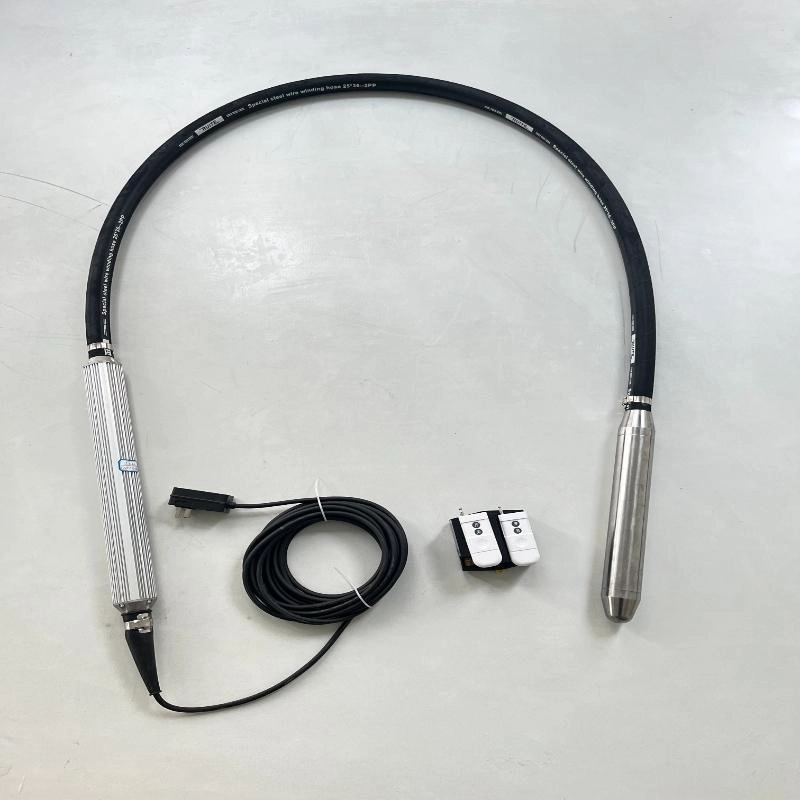
Which Type of Internal Concrete Vibrator is Specifically Designed for Heavy-Duty Construction
Release time: 2026-05-14
Table of Contents
In the realm of mega-infrastructure, civil engineering, and massive architectural undertakings, the structural integrity of a build rests quite literally on its foundation. When pouring thousands of cubic yards of concrete for dams, bridge piers, high-rise foundations, or nuclear power facilities, the consolidation process cannot be left to chance. Voids, entrapped air pockets, and honeycombing can severely compromise the compressive strength and durability of the cured structure.
To prevent these catastrophic structural failures, contractors must utilize specialized equipment. While the market is flooded with light commercial options, selecting the right heavy-duty construction internal concrete vibrator is paramount to ensuring that low-slump, harsh concrete mixes are densely packed around dense grids of reinforcing steel (rebar).
This comprehensive guide explores the specific types of internal vibrators engineered for the most punishing construction environments, detailing their mechanics, comparative advantages, and essential selection criteria.
Understanding the Demands of Heavy-Duty Concrete Consolidation
Before identifying the specific machinery required, it is crucial to understand what separates “heavy-duty” applications from standard commercial builds. Heavy-duty construction projects typically involve:
- Massive Pour Volumes: Continuous pours that can last 24 to 72 hours without interruption.
- Low-Slump Concrete: Stiff mixes with low water-to-cement ratios, which are incredibly difficult to move and consolidate.
- Large Aggregate Sizes: Aggregates exceeding 2.5 inches in diameter, requiring massive centrifugal force to displace.
- Congested Reinforcement: Intricate, closely spaced rebar grids that impede the flow of concrete and run the risk of creating structural voids.
Standard flexible-shaft vibrators, commonly used in residential or light commercial work, will quickly overheat, lose head speed, or suffer shaft breakage under these extreme conditions. Therefore, the landscape of concrete vibration machinery has evolved significantly to meet these rigorous demands, bringing us to the true champions of the heavy-duty sector.
The Heavy-Duty Champion: High-Frequency (High-Cycle) Motor-in-Head Electric Vibrators
When asked which type of internal concrete vibrator is specifically designed for heavy-duty construction, the definitive answer is the High-Frequency (or High-Cycle) Motor-in-Head Electric Vibrator.
Unlike standard vibrators where the motor sits outside the concrete and transfers power via a long, flexible, spinning shaft, high-frequency models house a specialized electric motor directly inside the vibrator head (the poker) itself.
Why High-Frequency Motor-in-Head Models Dominate
1. Unyielding Speed Under Load
The most critical advantage of high-cycle vibrators is their ability to maintain a consistent vibration frequency—typically around 12,000 vibrations per minute (vpm)—even when submerged in the stiffest, lowest-slump concrete. Standard flex-shaft vibrators experience a significant drop in RPM (up to 30%) when placed under load, drastically reducing their consolidation effectiveness. High-cycle motors rely on high-frequency inverters or converters (often converting standard 60Hz power to 200Hz or 400Hz), providing the immense torque needed to keep the eccentric weight spinning at optimal speeds regardless of concrete resistance.
2. Elimination of the Flexible Shaft
By moving the motor into the head, engineers completely eliminated the rotating inner core of the flexible shaft. In standard vibrators, this spinning core is the primary point of failure; it creates friction, overheats, and snaps under heavy use. In motor-in-head models, the hose connecting the head to the power switch only contains stationary electrical wires, making the unit infinitely more durable and allowing for much longer hose lengths (often up to 50 feet or more) to reach deep into massive formwork.
3. Superior Amplitude and Centrifugal Force
Heavy-duty applications require a larger “radius of action” (the area around the vibrator head that is effectively consolidated). High-frequency heads can be manufactured in massive diameters (up to 6 inches for dam construction), generating extreme centrifugal forces capable of moving heavy aggregates and quickly forcing entrapped air to the surface.
The Robust Alternative: Pneumatic (Air-Driven) Internal Vibrators
While high-frequency electric models are the standard for most heavy civil work, Pneumatic Internal Vibrators are the specifically designed alternative for environments that demand absolute ruggedness and continuous, brutal operation.
Pneumatic vibrators are powered by compressed air delivered from large industrial air compressors. The air rushes into the head, spinning an eccentric turbine or rotor at incredible speeds (often exceeding 12,000 to 17,000 vpm).
Distinct Advantages of Pneumatic Systems
- Zero Electrical Hazards: In environments where water is prevalent (dam construction, bridge footings) or in explosive atmospheres (tunnels, mining), pneumatic vibrators eliminate the risk of electrical shock or sparks.
- Self-Cooling Mechanism: As the compressed air expands and exhausts through the vibrator head, it naturally cools the internal components. This allows pneumatic vibrators to run continuously for days on end without overheating—a common requirement in continuous slip-form paving or mass foundation pours.
- Minimal Moving Parts: With only a single rotating turbine inside the head, there is very little that can mechanically fail, drastically reducing maintenance downtime on remote job sites.
However, their major drawback is the reliance on massive, fuel-consuming air compressors and the cumbersome nature of thick, high-pressure air hoses.
Comparative Analysis of Heavy-Duty Internal Vibrators
To assist procurement managers and site engineers in making data-driven decisions, the following table breaks down the differences between the primary types of heavy-duty vibrators.
| Feature / Specification | High-Frequency Electric (Motor-in-Head) | Pneumatic (Air-Driven) | Standard Flexible Shaft (For Comparison) |
|---|---|---|---|
| Power Source | High-cycle electric converter/inverter | Industrial air compressor | Standard 120V/240V AC or Gas Engine |
| VPM Under Load | 10,000 – 12,000 (Consistent) | 10,000 – 17,000 (Varies with air pressure) | 8,000 – 10,000 (Drops significantly) |
| Cooling Method | Surrounding concrete (requires submersion) | Expanding exhaust air (Self-cooling) | Air-cooled motor (external) |
| Max Head Diameter | Up to 6+ inches (Dam sizes) | Up to 6 inches | Usually capped at 2.5 to 3 inches |
| Radius of Action | Very Large (up to 40 inches) | Large (up to 35 inches) | Moderate to Small (up to 20 inches) |
| Ideal Application | Civil infrastructure, high-rises, bridges | Tunnels, dams, continuous heavy pours | Residential, light commercial, flatwork |
| Primary Limitation | Requires specialized frequency converters | Requires bulky compressors & heavy hoses | Overheats and breaks under heavy continuous load |
Essential Specifications to Evaluate Prior to Procurement
When evaluating a heavy-duty construction internal concrete vibrator, procurement teams must look past the brand name and focus strictly on the engineering specifications. Understanding the interplay between frequency, amplitude, and head diameter is critical for project success.
1. Frequency (Vibrations Per Minute – VPM)
Frequency determines how quickly the vibrator impulses the concrete. High frequency (10,000 to 12,000 VPM) is essential to liquefy the mortar portion of the concrete mix, reducing internal friction and allowing the aggregate to settle. For heavy-duty low-slump mixes, ensuring the equipment maintains this frequency under load is non-negotiable.
2. Amplitude
Amplitude refers to the maximum distance the vibrator head moves from its resting axis. While frequency liquefies the sand and cement paste, amplitude is what physically pushes the large, heavy pieces of aggregate into place. Heavy infrastructure concrete, which uses larger crushed stone, requires vibrators with high amplitude. If the amplitude is too low, the vibrator will simply hum in place without moving the heavy materials, leading to rock pockets.
3. Centrifugal Force
This is the total output energy of the vibrator, a combination of head mass, eccentric weight mass, and speed. Measured in pounds of force (lbf) or Newtons (N), heavy-duty models often output between 1,000 to over 3,000 lbf. High centrifugal force equates to a larger radius of action, allowing operators to consolidate larger volumes of concrete with fewer insertions.
4. Head Diameter and Shape
The general rule of construction engineering is to use the largest vibrator head that can comfortably fit between the reinforcing steel grids. For mass concrete pours like dam blocks, specialized “dam vibrators” with heads up to 6 inches (150mm) in diameter are used, often mounted on excavators or tractors rather than being hand-held. Furthermore, modern heavy-duty heads often feature a square or hardened hexagonal profile, which transfers energy into the concrete more efficiently than a perfectly smooth cylinder.
Best Practices for Utilizing Heavy-Duty Vibrators on Site
Investing in premium equipment is only half the battle; proper operational technique is crucial. Even the most advanced machinery will fail to consolidate concrete properly if mishandled by operators.
- Vertical Insertion: Vibrators must always be inserted perfectly vertically and allowed to sink under their own weight. Inserting them at an angle can cause the vibrator to get tangled in the rebar and results in uneven consolidation layers.
- Rapid Insertion, Slow Withdrawal: The head should be dropped into the concrete quickly to reach the bottom of the lift, and then withdrawn very slowly (about 1 to 3 inches per second). This slow withdrawal allows the vibrator to close the “hole” it creates, ensuring no air is sucked back down into the mix.
- Overlapping Radius of Action: Operators must visualize the effective radius of the vibrator head (typically 1.5 times the head diameter). Insertions should be spaced systematically so that the radius of action overlaps by a few inches, ensuring no “dead zones” are left unconsolidated.
- Penetrating Previous Lifts: When pouring in layers (lifts), the vibrator head must penetrate 3 to 6 inches into the previously poured layer beneath it. This knits the two layers together, preventing “cold joints”—weak seams where the structural integrity is compromised.
The Financial Impact of Proper Equipment Selection
While high-cycle electric and large pneumatic systems command a higher initial capital expenditure than standard flex-shaft models, their Return on Investment (ROI) in the heavy civil sector is undeniable.
The market offers a wide array of concrete vibrators for construction projects, but not all are created equal. Using underpowered equipment on a major build leads to severe financial and structural consequences. Honeycombing discovered after the formwork is stripped requires expensive, time-consuming epoxy injections and structural patching. In worst-case scenarios, failure to consolidate properly can result in the outright rejection of a poured element, requiring demolition and complete repouring at immense cost to the contractor.
Furthermore, the durability of heavy-duty models reduces equipment downtime. On a multi-million dollar pour schedule, halting concrete trucks because a cheap vibrator shaft snapped is an unacceptable logistical failure.
Conclusion
When tackling massive infrastructure, dams, high-rises, and heavily reinforced structures, standard commercial equipment simply cannot survive the rigorous demands. The specific answer to the challenge of heavy-duty consolidation lies in High-Frequency Motor-in-Head Electric Vibrators and heavy-duty Pneumatic Vibrators.
By utilizing mechanisms that maintain optimal speed under extreme loads, generating massive centrifugal forces, and eliminating fragile moving parts, these tools ensure that low-slump concrete is densely packed, air voids are expelled, and an unbreakable bond with the reinforcing steel is formed. For any serious contractor, investing in top-tier concrete vibration machinery pays dividends in structural safety, project efficiency, and long-term reputational excellence.
About the Author – Onnew
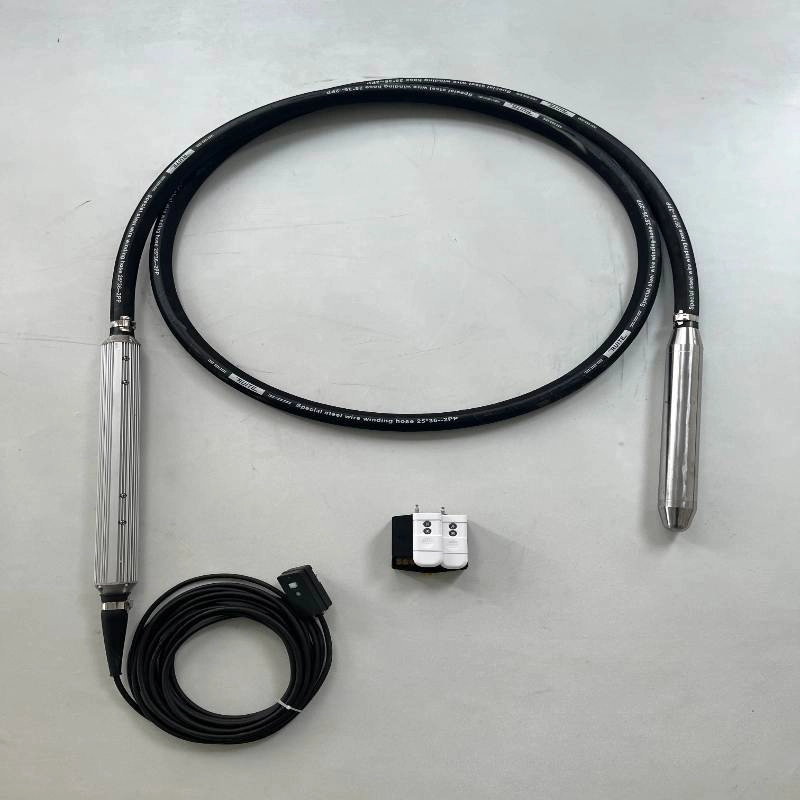
ONNEW is a leading concrete vibrator manufacturer in China. Our independently developed intelligent variable frequency concrete vibrator is a variable frequency vibrator with a built-in motor, eliminating the bulky external motor and fragile, inefficient, and jamming flexible shaft of traditional vibrators.
Civilian voltage 220V(customizable based on region).
Customized rubber tube, wear-resistant and tough, 1800 N pulling force, length 1-50m.
Built-in Permanent Magnet Synchronous Inverter Motor.
Streamlined configuration eliminates rebar obstruction.
Wear-resistant head, made of stainless steel.
Strong load capacity, wide voltage, high power, long life frequency conversion controller.
FAQs
1. Can I use a standard flexible shaft vibrator for heavy civil construction if I use multiple units?
No, using multiple standard vibrators is not an adequate substitute for a high-frequency or pneumatic heavy-duty vibrator. Standard flex-shaft units experience a significant RPM drop when submerged in stiff, low-slump mass concrete. Regardless of how many you use, they lack the high amplitude and sustained frequency required to move large aggregates and properly consolidate dense mixes. Furthermore, standard shafts will quickly overheat and break under continuous, heavy loads.
2. What head size is generally recommended when selecting concrete vibrators for construction projects involving heavy rebar?
The industry standard rule is to use the largest vibrator head that can comfortably pass through the tightest spacing of the reinforcing steel (rebar), while leaving at least 1 to 2 inches of clearance on all sides. For heavy infrastructure, if the rebar spacing is wide enough, head diameters of 2.5 inches to 4 inches are preferred to maximize the radius of action and speed up the consolidation process.
3. Are frequency converters mandatory when operating high-cycle electric motor-in-head vibrators?
Yes, they are essential. High-cycle vibrators require 200Hz to 400Hz power to achieve their sustained 12,000 VPM speeds. Standard electrical grids and generators provide 50Hz or 60Hz power. Therefore, you must use an external frequency converter, or purchase modern “electronic” high-frequency vibrators which have a miniaturized frequency inverter built directly into the switch box on the power cord.