Eliminating Honeycombing Flaws Automatically Using an Intelligent Concrete Vibrator
Release time: 2026-05-09
Table of Contents
In the demanding world of structural engineering and high-performance construction, the integrity of a concrete pour is non-negotiable. One of the most persistent and visually detrimental issues faced by contractors is “honeycombing”—the presence of voids and stony pockets on the surface or within the interior of a concrete structure. These flaws occur when the mortar fails to fill the spaces between coarse aggregate particles, often due to improper consolidation. Traditionally, preventing this required skilled manual labor and guesswork. However, the industry is undergoing a digital transformation, moving toward automated solutions that ensure structural density every single time.


The Cost of Consolidation Errors
Honeycombing is more than just an aesthetic blemish; it is a structural liability. When air is trapped or the mix is poorly distributed, the effective cross-sectional area of the concrete member is reduced. This can lead to:
- Reduced Load-Bearing Capacity: Voids weaken the internal matrix, potentially leading to premature failure under stress.
- Corrosion of Reinforcement: Exposed rebar or proximity to voids allows moisture and chlorides to penetrate, leading to oxidation and expansion of the steel.
- Water Permeability: Seepage through honeycombed areas can compromise the longevity of foundations, dams, and tunnels.
- Costly Remediation: Patching and grouting honeycombed areas post-pour is labor-intensive and rarely matches the strength or appearance of the original cast.
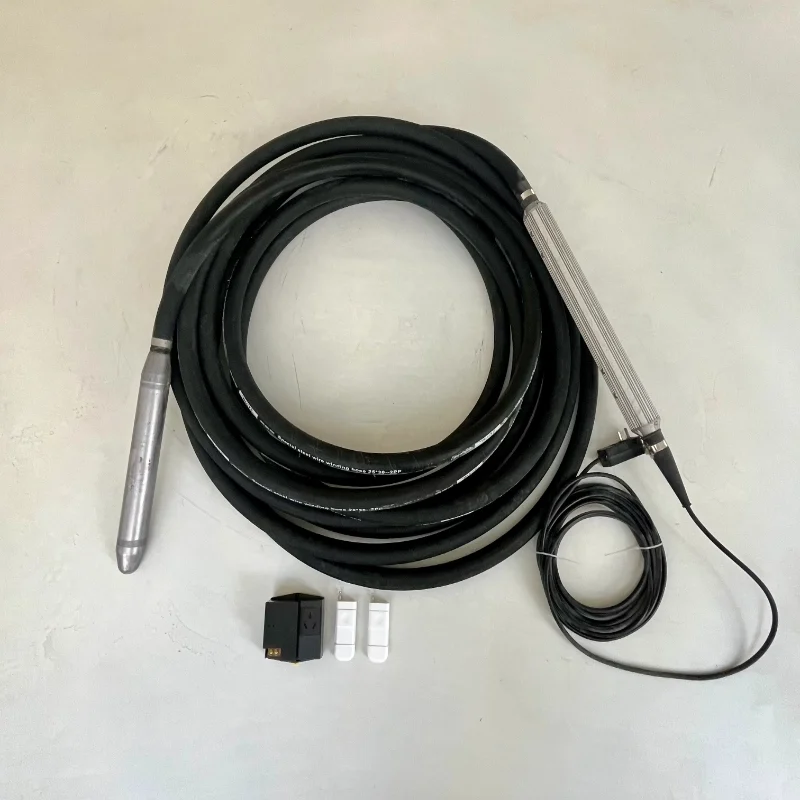
To address these challenges, the construction sector has looked toward the pivotal role played by intelligent concrete vibrator technology in modern construction. By integrating sensors and feedback loops, we can now move beyond the limitations of manual vibration.
Understanding the Intelligent Approach
Manual vibration relies heavily on the intuition of the operator. If the vibrator is removed too quickly, air remains trapped. If it is left too long, segregation occurs—the heavy aggregate sinks while the grout rises.
Modern systems solve this by utilizing real-time data. An intelligent concrete vibrator technology setup uses advanced algorithms to monitor the resistance of the concrete mix. As the concrete liquefies and air bubbles escape, the internal resistance changes. The system detects this shift and signals the operator—or the automated rig—when the optimal level of consolidation has been reached. This eliminates the “human factor” and provides a documented record of quality for every cubic meter poured.
The Rise of Automation in Concrete Consolidation
Automation is the next logical step in the evolution of job sites. The emergence of the automatic intelligent concrete vibrator marks a paradigm shift in how we handle complex pours. Unlike handheld units, these automated systems can be mounted on slipform pavers or specialized robotic arms, ensuring consistent coverage across large surface areas.
By deploying an automatic intelligent concrete vibrator, project managers can ensure that the vibration frequency and amplitude are adjusted dynamically based on the specific slump and temperature of the concrete. This level of precision is virtually impossible to achieve with manual equipment, especially during night shifts or in harsh weather conditions where operator fatigue becomes a significant factor.
Technical Comparison: Manual vs. Intelligent Systems
The following table outlines the key differences between traditional methods and the new automated standard.
| Feature | Traditional Manual Vibrator | Intelligent Automatic System |
| Consolidation Control | Subjective (Operator’s eye/ear) | Objective (Sensor data & resistance feedback) |
| Consistency | Highly variable | Uniform across all pour zones |
| Data Logging | None | Real-time GPS and consolidation reporting |
| Risk of Segregation | High (due to over-vibration) | Minimal (automatic shut-off/frequency adjustment) |
| Labor Requirement | High | Low (semi-autonomous or fully automated) |
| Long-term ROI | Low (high repair costs) | High (reduced rework and enhanced durability) |
Implementation and Sourcing: Finding the Right Partner
Transitioning to automated consolidation requires not just the hardware, but a deep understanding of how these systems integrate with existing workflows. Partnering with a reputable intelligent concrete vibrator distributor is essential for companies looking to modernize their fleet. A dedicated distributor provides more than just the product; they offer calibration services, software updates, and operator training that ensure the technology is utilized to its full potential.
When selecting a supplier, look for those who specialize in standards of documentation. This means their products come with comprehensive digital manuals and integration guides that make it easy for project engineers to include the equipment in their BIM (Building Information Modeling) workflows. Finding a certified intelligent concrete vibrator distributor that provides global support and modular parts can significantly reduce downtime on international projects.
Conclusion: Future-Proofing Concrete Structures
The construction industry is no longer satisfied with “good enough.” As structures become taller and designs more complex, the margin for error shrinks. Leveraging intelligent concrete vibrator technology to ensure zero-defect output is becoming a standard requirement in high-stakes infrastructure projects.
By eliminating honeycombing at the source through the use of an automatic intelligent concrete vibrator, developers can guarantee the longevity of their assets while significantly reducing the costs associated with post-construction repairs. The future of concrete is not just stronger; it is smarter.
FAQ
1. How does an intelligent vibrator detect when consolidation is complete?
Intelligent vibrators monitor the power consumption and centrifugal force resistance of the motor. As air voids are removed and the concrete becomes a fluid mass, the “drag” on the vibrator head changes. The system analyzes these resistance patterns in real-time to determine when the air has been sufficiently evacuated without causing aggregate segregation.
2. Can these automated systems be used with all types of concrete mixes?
Yes. One of the primary advantages of intelligent technology is its adaptability. Whether you are using high-slump self-consolidating concrete or a stiff, low-slump mix for paving, the system can be calibrated to the specific rheology of the material, adjusting its frequency (VPM) to match the resonant frequency of the mix.
3. What is the typical ROI for switching to intelligent vibration equipment?
While the initial investment is higher than manual tools, the ROI is typically realized within the first few major projects. Savings come from three main areas: the elimination of manual patching/rework costs, a reduction in the number of required on-site consolidation specialists, and the avoidance of long-term structural integrity penalties or insurance claims.