PMSM Concrete Construction Vibrator: How Intelligent Motor Technology Improves Concrete Compaction Performance
Release time: 2026-08-05
Table of Contents
When purchasing concrete construction equipment, many contractors and procurement teams initially focus on one specification: motor power.
However, real jobsite performance depends on more than the number of watts or kilowatts.
The more important question is:
How efficiently can the equipment convert electrical energy into stable vibration performance during continuous concrete placement?
For large foundations, reinforced structures, industrial floors, and high-strength concrete projects, vibration quality directly influences concrete density, surface finish, and long-term structural reliability.
A new generation of PMSM Concrete Vibrator System changes the traditional approach by integrating permanent magnet synchronous motor technology directly into the vibration unit.

Compared with conventional concrete vibrators using external motors and mechanical shafts, this design focuses on improving energy transmission efficiency, vibration stability, and operator convenience.
For contractors, distributors, and construction equipment buyers, understanding this technology helps make better purchasing decisions based on total performance rather than initial price alone. ONNEW focuses on developing concrete vibration equipment that combines intelligent motor technology with practical jobsite requirements, helping professional users improve efficiency and equipment reliability in demanding applications.
Why Traditional Concrete Vibrators May Limit Jobsite Efficiency
Traditional concrete vibration equipment commonly uses an external motor connected to a flexible shaft that transfers vibration energy to the poker head.
Although this structure has been widely used, it can create several challenges during demanding construction projects.
Power Loss During Transmission
Mechanical transmission systems may experience energy loss caused by friction between internal components.
As working distance increases, maintaining consistent vibration performance can become more challenging.
Higher Maintenance Requirements
Flexible shafts are exposed to continuous bending and mechanical stress.
Over long-term operation, components may require frequent inspection, replacement, or maintenance.
Operator Fatigue
Traditional shaft-driven systems transfer vibration through the hose structure.
During extended concrete pouring operations, this can increase operator fatigue and reduce working comfort.
Unstable Performance Under Different Loads
Concrete density, reinforcement conditions, and working resistance can affect vibration output.
For contractors working on projects with strict quality requirements, inconsistent vibration performance may increase the risk of poor consolidation.
The PMSM Advantage: A Smarter Motor-In-Head Design
The Permanent Magnet Synchronous Motor Concrete Vibrator introduces a different approach to vibration generation.
Instead of relying on a separate motor and mechanical shaft transmission, the PMSM motor is integrated directly into the vibrator head.
This motor-in-head structure allows vibration energy to be generated closer to the working point, reducing unnecessary transmission loss.
Compared with traditional induction motor structures, PMSM technology provides:
- Higher energy conversion efficiency;
- More stable operating speed;
- Better response under changing loads;
- Reduced mechanical transmission components.
For modern construction projects, this means a more efficient High-Frequency Internal Concrete Vibrator solution designed for continuous professional use.
Technical Snapshot
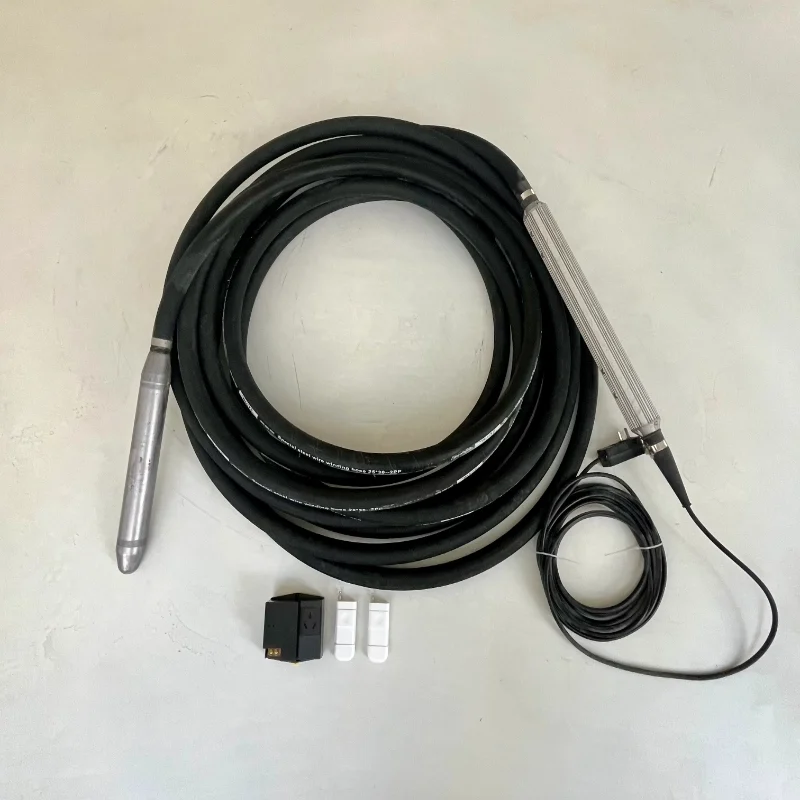
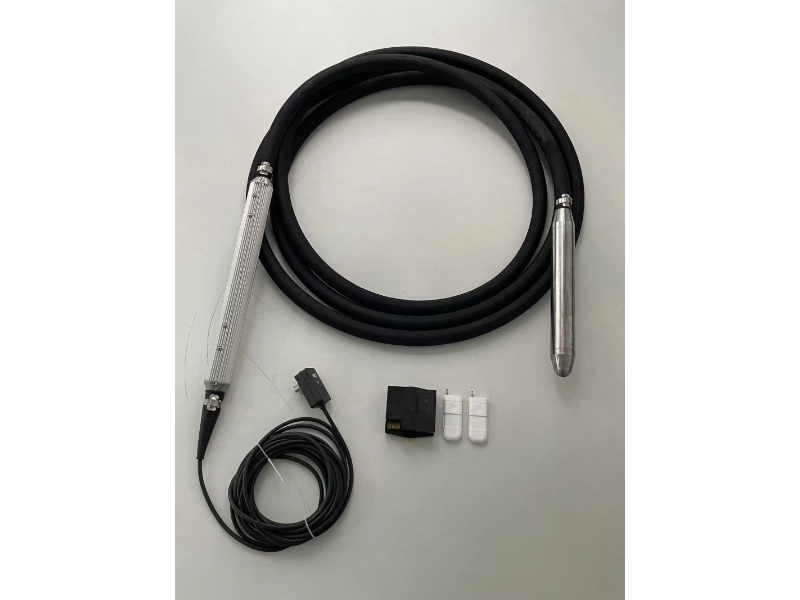
Typical specifications of this intelligent PMSM vibration system include:
| Parameter | Specification |
| Motor Type | Permanent Magnet Synchronous Motor (PMSM) |
| Vibration Frequency | 12,000 RPM (200 Hz) |
| Centrifugal Force | 5,000N – 5,500N |
| Maximum Power | 2,000W |
| Noise Level | <75 dB |
| Rubber Hose Length | 4 m |
| Vibrator Head Length | 0.4 m |
| Inverter Length | 0.5 m |
For buyers, these specifications represent more than technical numbers.
They indicate how the equipment can perform in practical applications:
- High-frequency vibration supports efficient concrete consolidation;
- PMSM technology improves power transmission efficiency;
- Compact design supports easier operation;
- Lower noise helps create a more comfortable working environment.
Key Performance Benefits of PMSM Concrete Vibration Technology
1. High-Frequency Operation for Effective Concrete Consolidation
The Intelligent High-Frequency Concrete Vibrator operates at approximately 12,000 RPM (200 Hz), providing a high-frequency vibration output designed for professional internal concrete consolidation.
During concrete placement, high-frequency vibration helps reduce internal friction within fresh concrete, allowing aggregates and cement paste to achieve a denser structure when properly operated.
For projects involving low-slump concrete, reinforced structures, or high-strength applications, stable vibration performance plays an important role in reducing voids and improving surface quality.
The result is more consistent concrete consolidation and reduced risk of defects caused by insufficient vibration.
2. More Efficient Power Transmission
One of the major advantages of a PMSM-Based Concrete Vibration Equipment design is the elimination of traditional flexible shaft transmission.
By integrating the motor directly into the vibrator head, electrical energy can be converted into vibration output more efficiently.
This structure helps reduce energy loss commonly associated with mechanical transmission systems.
For contractors, this means:
- More stable vibration performance;
- Reduced dependence on mechanical shaft components;
- Improved efficiency during continuous concrete pouring;
- Lower maintenance requirements over long-term use.
3. Reliable Startup Under Heavy Concrete Conditions
Concrete vibration equipment often operates in demanding environments where the vibrator head may already be inserted into fresh concrete.
Traditional systems may experience greater resistance during startup.
The intelligent variable-frequency control system of this PMSM Concrete Vibrator System allows smoother startup operation under load conditions.
This helps operators save time during continuous pouring processes while reducing unnecessary operation steps.
4. Reduced Hose Vibration for Better Operator Comfort
Because the PMSM motor is integrated into the vibration head, the hose does not contain rotating mechanical transmission components.
This structure helps reduce vibration transmitted through the hose.
Combined with the compact 0.4 m vibration head and 4 m rubber tube, the equipment supports easier handling during extended concrete applications.
For operators, this means:
- Reduced hand fatigue;
- More comfortable operation;
- Easier control around reinforcement and formwork;
- Improved working efficiency during long-duration projects.
5. Export-Oriented Manufacturing with Long-Term Value
For overseas buyers, equipment selection is not only about purchasing a machine.
It is about choosing a reliable supplier capable of supporting long-term projects.
Modern PMSM Concrete Vibrator System solutions combine advanced motor technology with practical manufacturing experience to provide:
- Stable product quality;
- Competitive supply capability;
- Professional technical support;
- Suitable solutions for international construction markets.
For contractors, distributors, and OEM partners, these factors contribute to better total cost performance throughout the equipment lifecycle.
What Buyers Should Evaluate Beyond Motor Power
When comparing concrete vibration equipment, professional buyers should consider more than rated power.
Frequency Stability Under Load
A high-quality vibration system should maintain stable frequency output when working inside dense concrete or reinforced structures.
PMSM technology helps maintain consistent performance under different operating conditions.
Power Transmission Efficiency
For deep foundations, columns, and large concrete pours, buyers should evaluate whether the equipment can maintain effective vibration output throughout the working process.
A motor-in-head design reduces transmission losses compared with traditional shaft-driven systems.
Maintenance Requirements
The number of mechanical components directly affects long-term maintenance costs.
A structure with fewer wear-prone transmission parts can help reduce downtime and replacement requirements.
Certification and Manufacturing Capability
For international projects, buyers often need suppliers that can provide stable production, technical documentation, and export experience.
Working with an experienced manufacturer helps ensure smoother procurement and after-sales cooperation.
Spare Parts and Technical Support
Before purchasing, buyers should consider:
- Availability of replacement components;
- Supplier response time;
- Technical assistance;
- Long-term cooperation capability.
These factors often influence the actual ownership experience after purchase.
Applications of PMSM Concrete Construction Vibrators
The PMSM Concrete Construction Vibrator is suitable for various professional construction environments.
High-Strength Concrete Projects
For C40 and above concrete applications, stable high-frequency vibration helps support effective consolidation.
Heavily Reinforced Structures
Dense reinforcement areas require equipment that can provide consistent vibration performance while allowing flexible operation.
Columns, Walls, and Vertical Structures
The compact vibration head and flexible hose design make the equipment suitable for vertical concrete components.
Industrial Floors and Large Slabs
For wide concrete areas, reliable vibration performance helps operators achieve more uniform results.
Long-Duration Concrete Pouring
Low noise operation and reduced hose vibration support improved operator comfort during extended working periods.
Making a Smarter Equipment Investment Decision
For modern contractors, the lowest purchase price does not always represent the best value.
The real cost of concrete vibration equipment includes:
- Maintenance frequency;
- Equipment reliability;
- Operating efficiency;
- Concrete quality results;
- Long-term service support.
A well-designed PMSM Concrete Vibration System helps contractors move from simply purchasing equipment to investing in more efficient construction performance.
With permanent magnet synchronous motor technology, intelligent frequency control, and a compact integrated structure, this type of vibrator provides a practical solution for professional concrete applications.
For contractors, distributors, and construction equipment buyers looking for reliable high-frequency vibration performance, PMSM technology represents a new direction in concrete construction equipment.
Through continuous development of intelligent concrete vibration equipment, ONNEW applies PMSM technology and integrated design concepts to meet the evolving requirements of global construction professionals.
Frequently Asked Questions
1. What is a PMSM Concrete Vibrator System?
A PMSM Concrete Vibrator System uses permanent magnet synchronous motor technology to generate vibration performance through an integrated motor structure, improving energy efficiency and operational stability.
2. What are the advantages of a Permanent Magnet Synchronous Motor Concrete Vibrator?
A Permanent Magnet Synchronous Motor Concrete Vibrator provides higher energy conversion efficiency, stable operating speed, reduced mechanical transmission components, and improved vibration consistency compared with traditional shaft-driven systems.
3. Why is high-frequency vibration important for concrete consolidation?
High-frequency vibration helps reduce internal friction in fresh concrete, allowing materials to achieve better consolidation and helping reduce potential defects caused by insufficient vibration.
4. What applications can use this PMSM concrete vibrator?
The PMSM concrete vibrator is suitable for high-strength concrete projects, reinforced structures, columns, walls, industrial floors, slabs, precast applications, and other professional construction environments.
5. What specifications does this PMSM concrete vibrator have?
Typical specifications include a permanent magnet synchronous motor, 12,000 RPM (200 Hz) vibration frequency, 2,000W maximum power, 5,000N–5,500N centrifugal force, a 4 m rubber hose, and a 0.4 m vibrator head.