What Concrete Vibrator is Best for Precast Elements
Release time: 2026-05-28
Table of Contents
The manufacturing of precast concrete relies heavily on precision, strength, and aesthetic perfection. Unlike cast-in-place concrete, precast elements—ranging from architectural facades and hollow-core slabs to retaining walls and drainage pipes—are produced in a controlled factory environment. This controlled setting allows for stringent quality assurance, but it also demands the highest standards of concrete consolidation. At the heart of this consolidation process is vibration. Choosing the optimal concrete vibrator for precast elements is a critical decision that directly impacts the structural integrity, surface finish, and overall durability of the final product.
In this comprehensive guide, we will explore the science behind concrete vibration, the various types of vibrators available, how to select the right equipment based on your specific precast applications, and advanced techniques to achieve flawless results.
Understanding the Science of Concrete Consolidation
Before diving into equipment selection, it is essential to understand why vibration is necessary and how it works physically. When concrete is poured into a precast mold, it contains a significant amount of entrapped air—often up to 20% of its volume. Furthermore, the friction between the cement, sand, and aggregate particles prevents the mix from flowing smoothly into the intricate corners of the mold and around reinforcing steel (rebar).
Vibration introduces mechanical energy into the concrete mix, effectively overcoming this internal friction. This process is known as thixotropy. When vibrated, the concrete temporarily transitions from a stiff, plastic state into a fluid, liquid-like state.
During this fluid phase, two critical things happen:
- Air Bubbles Rise: The entrapped air, being lighter than the concrete materials, is forced to the surface where it escapes.
- Material Settles: The heavy aggregates settle evenly, and the cement paste thoroughly coats the rebar and fills every detail of the formwork.
Once the vibration stops, the internal friction returns, and the concrete regains its solid structure, now denser, stronger, and free of weakening voids or surface blemishes (honeycombing).
The Dynamics of Amplitude and Frequency
To evaluate vibration equipment, one must understand its two primary operating parameters:
- Amplitude: The maximum distance the vibrating element moves from its resting position. High amplitude provides the “punch” needed to move large, heavy aggregates and stiff (low-slump) concrete mixes over a wider area.
- Frequency: The number of vibration cycles per minute (vpm). High frequency is essential for liquefying the cement paste, breaking down surface tension, and forcing small air bubbles to the surface, resulting in a smooth, architectural-grade finish.
Types of Vibrators Used in Precast Concrete Production
The precast industry utilizes three primary categories of vibrators. The best choice depends entirely on the size, shape, and reinforcement density of the element being produced.
1. Internal Vibrators (Poker Vibrators)
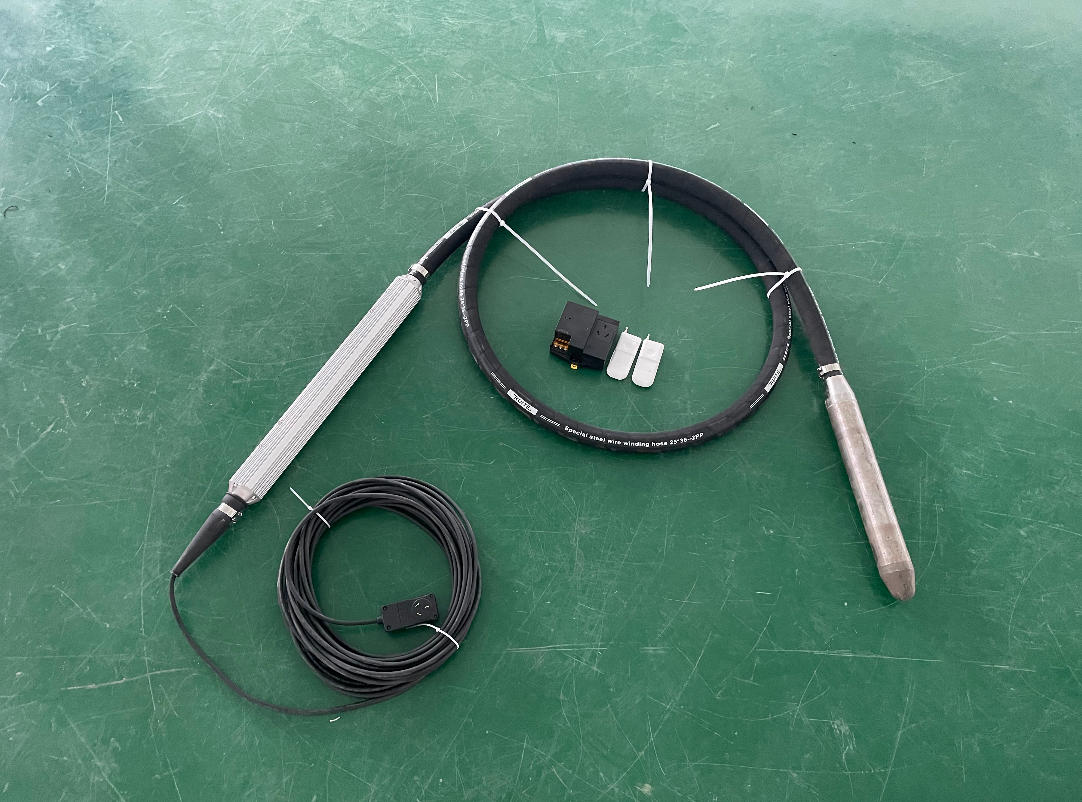
Internal vibrators, commonly referred to as poker or immersion vibrators, are inserted directly into the fresh concrete. They consist of a vibrating head (the poker) connected to a motor via a flexible shaft.
- Best For: Deep molds, heavily reinforced elements, columns, and large structural beams where external vibration cannot penetrate the core of the mass.
- Mechanism: The poker generates radial vibrations that push outward into the concrete. The operator inserts the poker rapidly and withdraws it slowly to allow the hole to close behind it.
- Power Sources: They can be powered by electricity (high-frequency electric pokers are standard in precast plants), pneumatic air, or gasoline engines (though less common in indoor factory settings due to fumes).
2. External Vibrators (Formwork Vibrators)
External vibrators are mounted directly onto the exterior of the precast mold or formwork. Instead of vibrating the concrete directly, they vibrate the mold, which in turn transfers the energy to the concrete inside.
- Best For: Thin panels, heavily reinforced walls where a poker cannot be inserted, complex architectural shapes, and elements requiring a pristine, flawless surface finish on all sides.
- Mechanism: These units typically feature rotating eccentric weights driven by an electric motor or pneumatic turbine. Proper placement and rigid attachment to the formwork (often steel molds) are absolutely crucial for efficient energy transfer.
- Considerations: Formwork must be structurally sound enough to withstand continuous vibration without fatiguing or breaking apart.
3. Vibrating Tables
Vibrating tables are flat platforms equipped with specialized vibratory motors underneath. The entire precast mold is placed on top of the table.
- Best For: Smaller precast elements, paving stones, decorative concrete pieces, flat architectural panels, and standardized mass-production items.
- Mechanism: The table provides uniform, vertical (or sometimes multi-directional) vibration across the entire bottom surface of the mold. This ensures highly consistent consolidation for flat, shallow pours.
Comparative Analysis: Choosing the Right Equipment
To simplify your decision-making process, the following table breaks down the optimal use cases, advantages, and disadvantages of the main types of precast concrete vibration equipment.
| Vibrator Type | Ideal Precast Application | Key Advantages | Disadvantages / Limitations |
|---|---|---|---|
| Internal (Poker) | Large beams, deep columns, bridge girders, thick retaining walls. | Direct energy transfer to concrete; cost-effective; versatile across different mold types. | Can leave marks if touching the mold; difficult to use in thin panels or heavily congested rebar. |
| External (Formwork) | Thin wall panels, architectural facades, pipes, heavily reinforced sections. | Exceptional surface finish; no interference with rebar; continuous, automated operation. | Requires strong, rigid steel formwork; noise levels can be high; requires strategic placement calculations. |
| Vibrating Tables | Pavers, small decorative blocks, flat shallow panels, test cylinders. | Perfectly uniform vibration; highly efficient for batch manufacturing; easy to automate. | Limited by the size and weight capacity of the table; not suitable for tall or deeply complex molds. |
Key Factors in Selecting the Best Concrete Vibrator
Determining the “best” vibrator is not about finding a universally perfect machine; it is about matching the equipment’s specifications to the unique variables of your precast project. Consider the following crucial factors:
1. Concrete Mix Design (Slump and Rheology)
The consistency of your concrete dictates the vibration requirements.
- Low-Slump / Stiff Mixes: Commonly used in precast for early strength gain. These mixes require high-amplitude vibrators to physically force the dry, heavy materials into place. Large internal pokers or heavy-duty external vibrators are necessary.
- High-Slump / Flowing Mixes: Self-Consolidating Concrete (SCC) requires little to no vibration. However, standard high-slump mixes still need light vibration to release entrapped air. High-frequency, lower-amplitude equipment is preferred here to prevent aggregate segregation.
2. Element Dimensions and Reinforcement Density
The physical constraints of your mold dictate the form factor of your equipment.
- If you are casting a thick structural beam, a large-diameter internal vibrator is the most efficient choice.
- If you are casting a thin architectural panel with a dense web of steel rebar, an internal vibrator will simply get stuck. External formwork vibrators are the only viable solution.
- For intricate architectural molds or smaller, delicate components, employing a lightweight concrete vibrator allows operators to maneuver easily without damaging the formwork or experiencing severe physical fatigue.
3. Surface Finish Requirements
In precast construction, aesthetics matter—especially for architectural elements exposed to the public. Internal vibrators can sometimes leave minor “poker marks” or localized areas of uneven paste distribution near the insertion point. If a flawless, glass-like finish is required, external formwork vibrators or vibrating tables operating at extremely high frequencies (up to 12,000 vpm) are the superior choice, as they draw the fine cement paste directly to the surface of the mold.
4. Power Supply and Plant Infrastructure
Precast plants typically run on fixed infrastructure. High-frequency electric vibrators (requiring frequency converters) are the industry standard due to their consistent power output, lower noise levels compared to pneumatic tools, and zero emissions. Pneumatic vibrators, however, are rugged, simple to maintain, and excel in environments where electricity poses a safety hazard, provided the plant has a sufficient industrial air compressor system.
5. Ergonomics and Operator Safety
Prolonged exposure to heavy vibration equipment can lead to Hand-Arm Vibration Syndrome (HAVS) in workers. When selecting manual equipment, prioritizing ergonomic designs with vibration-dampening handles is crucial. Additionally, selecting a modern, ergonomically designed lightweight concrete vibrator for manageable tasks significantly reduces operator fatigue, improves precision, and enhances overall workplace safety.
Best Practices for Precast Concrete Vibration
Even the best equipment will produce poor results if used incorrectly. Adhering to strict best practices is vital for precast quality control.
Proper Internal Vibration Technique
- Vertical Insertion: Always insert the poker vertically. Pushing it in at an angle can cause the heavy aggregates to slide and segregate.
- Fast In, Slow Out: Plunge the vibrator rapidly to the bottom of the layer to avoid vibrating the top layer prematurely. Withdraw it very slowly (about 1 inch per second) to allow the concrete to flow back together and fill the hole left by the poker.
- Overlapping Radii: Insert the vibrator at regular intervals. The radius of action for each insertion should overlap the previous one by about 1 to 2 inches to ensure no dead zones are left unvibrated.
- Avoid Rebar Contact: Never use the vibrator to push concrete laterally, and avoid resting the poker directly against the rebar or formwork, as this can damage the mold and alter the rebar alignment.
Proper External Vibration Technique
- Rigid Mounting: External vibrators must be bolted or welded securely to formwork stiffeners. If the mount is loose, the energy will be absorbed by the mount rather than transferred to the concrete.
- Strategic Spacing: Vibrators should be spaced evenly across the formwork based on their radius of action. The vibration fields should intersect to ensure complete coverage.
- Timing: Run external vibrators while the concrete is being placed, not just after. Stop the vibration as soon as the surface becomes glossy and large air bubbles stop breaking at the surface.
Recognizing and Avoiding Over-Vibration
More vibration is not always better. Over-vibrating concrete is a common mistake that leads to segregation. Segregation occurs when the heavy coarse aggregates sink to the bottom of the mold, leaving a weak layer of watery cement paste (laitance) at the top. This compromises both the structural strength and the surface durability of the precast element. Operators must be trained to watch the concrete surface carefully; once it flattens, looks shiny, and bubbles cease to emerge, vibration must stop immediately.
Conclusion
In summary, finding the perfect concrete vibrator for precast elements requires a careful analysis of your specific operational needs. There is no one-size-fits-all solution. Large structural components demand the deep-penetrating power of internal pokers, while thin, highly aesthetic architectural panels rely on the high-frequency finesse of external vibrators. By understanding the rheology of your concrete mix, respecting the dimensions of your molds, and adhering strictly to best practices, you can select the right equipment to ensure your precast products achieve maximum strength, durability, and visual perfection.
About the Author – Onnew
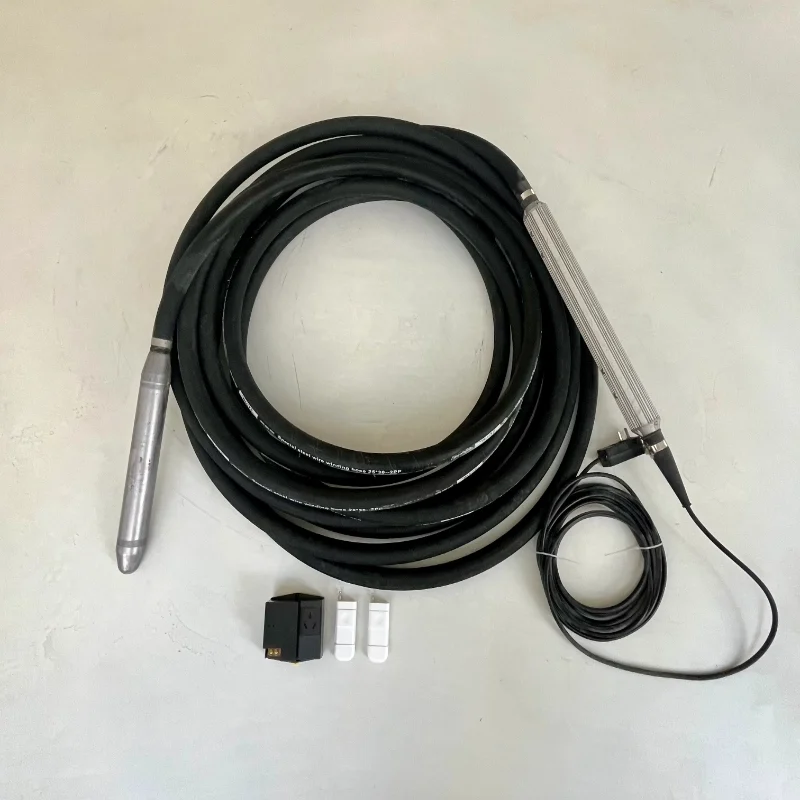
ONNEW is a leading concrete vibrator manufacturer in China. Our independently developed intelligent variable frequency concrete vibrator is a variable frequency vibrator with a built-in motor, eliminating the bulky external motor and fragile, inefficient, and jamming flexible shaft of traditional vibrators.

FAQs
1. Can I use a standard internal vibrator for thin precast architectural panels?
Generally, no. Standard internal pokers are often too thick to fit between the dense rebar mesh and the mold walls of thin panels. Attempting to force them can damage the mold and the steel alignment. For thin, detailed work, external formwork vibrators are highly recommended. If internal vibration is absolutely necessary for specific tight corners, this is where a lightweight concrete vibrator with a micro-poker head (under 1 inch in diameter) proves invaluable.
2. How can I tell if my precast concrete element has been under-vibrated or over-vibrated?
Under-vibration typically results in visible defects known as “honeycombing” on the surface, where coarse aggregates are exposed because cement paste failed to fill the gaps. You will also see excessive bug holes (small air pockets). Over-vibration causes segregation; you will notice a thick layer of watery, soupy cement paste (laitance) pooling at the top of the mold, while the heavy aggregates have sunk entirely to the bottom, leading to a structurally weak top layer.
3. What is the standard maintenance schedule for precast concrete vibration equipment?
Because this equipment operates under extreme stress, daily inspection is required. For internal pokers, check the flexible shaft for kinks or cracks and ensure the poker head is sealed and not leaking oil. For external units, constantly verify that mounting bolts remain tight, as the vibration naturally loosens them. Complete mechanical servicing of precast concrete vibration equipment—including bearing lubrication and electrical testing—should be conducted every 100 to 200 hours of operation, depending on the manufacturer’s specific guidelines.