How to Choose the Right High-Frequency Concrete Vibrator for a Construction Project
Release time: 2026-09-10
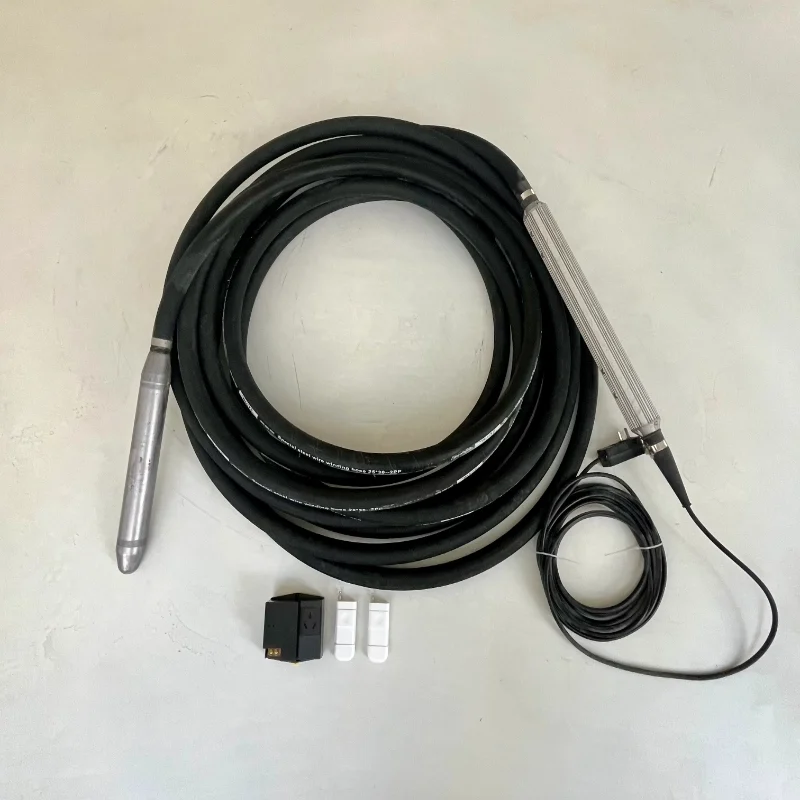
In construction projects, selecting the appropriate specifications for a high-frequency concrete vibrator requires matching the equipment to specific site conditions. Elements such as walls, columns and beams, foundations, floor slabs, and precast components differ in terms of structural dimensions, rebar density, concrete slump, and placement depth; consequently, factors such as vibrator head diameter, vibration frequency, amplitude, effective radius, and hose length must be selected accordingly. As a supplier specializing in the R&D and manufacturing of high-frequency concrete vibration equipment, ONNEW offers product configuration and selection support tailored to the specific needs of various construction projects.
Table of Contents
What factors should be considered when selecting a high-frequency concrete vibrator?
Before determining the specific model, it is recommended to verify the following project parameters:
Concrete type and slump
Rebar density and spacing
Thickness of the concrete structure
Placement depth
Space constraints at the work site
Required vibration coverage area
Continuous operating time
Site voltage and frequency
These factors collectively determine the required vibrator specifications. For instance, columns with dense rebar require a vibrator head capable of easily fitting between the bars, whereas large-area foundations prioritize the effective vibration radius and overall construction efficiency.
What size vibrator head should be chosen?
The diameter of the vibrator head is one of the most critical specifications to consider when selecting a high-frequency concrete vibrator.
Small-diameter heads offer greater maneuverability and are suitable for areas with dense rebar, tight spaces, or thin structural sections—such as walls, columns, beams, and small precast components.
Medium-diameter heads strike a balance between maneuverability and coverage, making them suitable for standard building structures.
Larger-diameter heads typically offer a wider effective radius, making them ideal for foundations, thick slabs, and mass concrete structures where there is ample working space.
It is important to note that a larger head is not always better. If the equipment cannot fit into the gaps between rebar, an oversized head can actually reduce construction efficiency. Therefore, the appropriate size should be selected based on rebar spacing and structural dimensions.
How should vibration frequency and amplitude be selected?
The core performance of high-frequency poker vibrator is typically defined by their vibration frequency and amplitude.
Vibration frequency refers to the number of vibrations produced by the vibrator head per unit of time, while amplitude refers to the magnitude of the vibratory movement. Both parameters must be matched to the concrete’s workability and the structural conditions.
When comparing products, it is not advisable to focus solely on the “maximum vibration frequency”; one should also consider:
| Key Specification | Why It Matters |
|---|---|
| Vibration Frequency | Affects the vibration rate and concrete consolidation process |
| Amplitude | Influences the movement range and vibration performance of the vibrator |
| Centrifugal Force | Indicates the effective vibration force generated by the equipment |
| Vibrator Head Diameter | Determines accessibility in reinforced or narrow areas and affects the coverage area |
| Effective Radius of Action | Indicates the effective area that can be consolidated by the vibrator |
| Motor Power | Supports the operating requirements and performance of the vibrator |
Therefore, the equipment best suited for a project is a model where these parameters are optimally balanced.
What specifications should be chosen for different construction projects?
Initial selections can be made based on the construction scenario:
| Construction Application | Recommended Specification Direction | Main Reason |
|---|---|---|
| Reinforced Concrete Columns | Small or medium vibrator head | Dense reinforcement and limited access |
| Concrete Walls | Small or medium vibrator head with suitable hose length | Wall thickness and working depth |
| Concrete Beams | Compact vibrator head | Dense reinforcement and narrow working spaces |
| Concrete Slabs | Medium or larger vibrator head | Large working area and improved construction efficiency |
| Concrete Foundations | Larger vibrator head and wider radius of action | Large concrete volume and deeper consolidation requirements |
| Precast Concrete | Compact and controllable vibrator | Different mold sizes, component shapes, and working conditions |
| Mass Concrete Structures | Larger vibrator head with suitable vibration force | Thick concrete sections and demanding consolidation requirements |
The above serves only as a preliminary guide; specific models should be confirmed based on factors such as concrete slump, rebar density, and site conditions.
How should the flexible shaft (hose) length be selected?
The length of the flexible shaft depends primarily on the depth of the pour and the operational range at the site.
For standard walls, columns, beams, or precast elements, shorter shafts are usually easier to handle. Conversely, for deep foundations, thick walls, or massive concrete structures, a shaft length capable of reaching the required depth is necessary.
A shaft that is too short may fail to reach the work area, while one that is too long can increase the operator’s burden. Therefore, it is recommended to determine the appropriate length based on the actual pouring depth plus the required operating distance, rather than blindly choosing the longest specification available.
What other specifications should be considered for overseas construction projects?
For overseas B2B buyers, in addition to mechanical parameters, it is essential to verify that the equipment is compatible with local construction conditions.
First, consider voltage and frequency, as power standards vary by country. Second, check whether the equipment supports continuous operation and if critical components—such as the motor, bearings, flexible shaft, and vibrator head—are durable enough for long-term use.
For bulk purchases or projects requiring branding customization, buyers should also confirm whether the supplier offers OEM/ODM services, custom power configurations, various shaft lengths, and specific product variations.
How can the right vibrator specifications for a project be quickly determined?
The following selection process can be adopted:
Project type → Concrete slump → Rebar density → Structural thickness → Placement depth → Vibrator head diameter → Frequency and amplitude → Effective radius → Hose length → Power supply configuration.
For example, for building columns with dense reinforcement, priority should be given to vibrator heads capable of fitting into the gaps between rebar; for large-area foundations, the focus should be on effective radius and construction efficiency; and for precast components, equipment should be selected based on mold dimensions and component shape to ensure greater flexibility.
When selecting high-frequency concrete vibrators for construction projects, choosing the right specifications is more important than simply pursuing higher frequencies or greater power. Buyers should determine the specific configuration by considering factors such as concrete properties, rebar density, structural dimensions, placement depth, vibrator head diameter, and on-site power supply. ONNEW specializes in the R&D and manufacturing of high-frequency concrete vibration equipment; the company provides vibrators in specifications tailored to various construction scenarios, along with technical support, helping contractors, precast concrete manufacturers, and equipment buyers select equipment that best matches actual operating conditions.