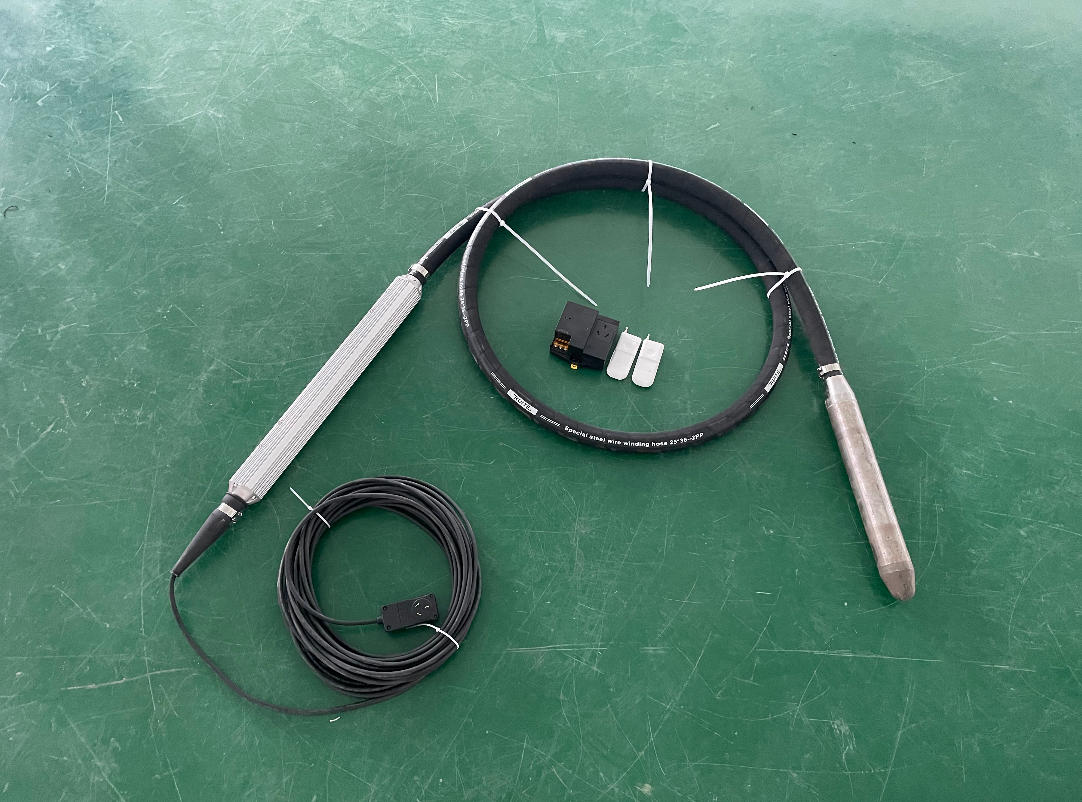
How to Use a High Frequency Vibrator for Precast Concrete Components
Release time: 2026-06-18
Table of Contents
The modern construction industry relies heavily on prefabricated materials to ensure rapid project completion, strict quality control, and superior structural integrity. Among the most critical processes in manufacturing these materials is the proper consolidation of the cementitious mix. If entrapped air is not effectively removed, the final product will suffer from surface blemishes, internal honeycombing, and compromised load-bearing capacities. This comprehensive guide details the exact methodologies, preparation steps, and operational best practices required to properly deploy a high frequency vibrator for precast concrete components.
By mastering the techniques outlined below, facility managers and casting operators can achieve flawless architectural finishes, maximize structural density, and minimize costly rejection rates in their manufacturing plants.
Understanding the Mechanics of High-Speed Consolidation
Before diving into operational procedures, it is essential to understand the underlying physics of how high-speed oscillation affects a cementitious mix. When fresh concrete is poured into a mold, it contains a significant amount of entrapped air—often up to 20% of its volume. This air must be expelled to achieve maximum density.
Standard internal pokers typically operate at around 10,000 to 12,000 vibrations per minute (VPM). While effective for general site work, they are often unsuitable for prefabricated elements which feature intricate molds, dense rebar networks, and strict surface finish requirements.
High-speed external oscillators, conversely, operate at much higher speeds—often ranging from 18,000 to 24,000 VPM. At these intense speeds, the rapid micro-movements temporarily break the friction between the aggregates and the cement paste. The mixture essentially undergoes “liquefaction.” During this liquefied state, gravity pulls the heavier aggregates downward while the lighter, buoyant air bubbles are forced to the surface and expelled. The high-speed nature of the equipment ensures that even the smallest micro-bubbles are agitated and removed, which is the secret behind the glass-like architectural finishes seen on premium prefabricated concrete units.
Choosing the Right Equipment: Pneumatic vs. Electric
External consolidation equipment generally falls into two primary categories based on their power source. Selecting the correct type depends on your facility’s infrastructure and the specific requirements of the mold.
Pneumatic Oscillators
Powered by compressed air, pneumatic units are incredibly robust and contain very few moving parts. They are practically immune to overheating, making them ideal for continuous, multi-shift operations in dusty environments. Their speed and amplitude can often be adjusted simply by regulating the airflow and pressure. However, they require a substantial and consistent compressed air infrastructure within the plant.
Electric Rotary Motors
Electric units rely on an electric motor spinning an eccentric weight. Modern versions are highly efficient and can be paired with Variable Frequency Drives (VFDs) to offer precise control over the rotational speed. This allows operators to perfectly tune the frequency to the specific resonance of the mold and the slump of the mix design. They are generally quieter than pneumatic variants but require careful cable management and protection against water ingress during washdown procedures.
Preparation and Formwork Rigidity
The success of external consolidation relies entirely on the transfer of kinetic energy from the motor, through the mold, and into the mix. If the formwork is weak or poorly designed, the energy will be absorbed by the mold’s flexing rather than penetrating the cement.
Formwork Material and Design
Molds used with rapid vibration devices must be exceptionally rigid. Steel forms are the industry standard because they transmit kinetic energy efficiently with minimal dampening. If timber or composite molds are utilized, they must be heavily reinforced with steel backing ribs. The formwork must be completely watertight; the liquefaction process is so intense that any small gap will cause the cement paste to leak out, leaving behind exposed aggregate and honeycombing at the joints.
Inspecting the Hardware
Prior to any pour, operators must conduct a thorough inspection:
- Ensure all mounting brackets are welded flawlessly to the stiffening ribs of the mold, not to the skin (which can cause tearing).
- Check that the locking wedges or bolts securing the equipment are pristine. A loose motor will not only fail to consolidate the mix but can detach violently, posing a severe safety hazard.
- Verify all power cables or pneumatic hoses are routed safely away from the pouring zone and crane pathways.
Installation and Positioning Strategies
The strategic placement of the consolidation units is arguably the most crucial step in the entire process. Energy dissipates as it travels outward from the mounting point. Therefore, motors must be arranged in a grid pattern that provides overlapping zones of influence.
General Mounting Rules
- Mount on Stiffeners: Never mount the unit directly to the flexible face of the mold. Always attach it to the structural profiles (U-channels or I-beams) that support the mold skin.
- Direction of Rotation: For electric units with unidirectional rotation, ensure the rotational direction assists in moving the concrete in the desired direction (usually upwards and outwards).
- Symmetrical Placement: Distribute the units symmetrically across the formwork to ensure even energy distribution and prevent localized segregation of the aggregates.
Optimal Placement Guidelines
Below is a standardized reference table for spacing external oscillation units based on the thickness of the mold and the slump of the mix.
| Mold Skin Material & Thickness | Concrete Mix Slump | Recommended Spacing (Horizontal) | Recommended Spacing (Vertical) | Motor Power Requirement |
|---|---|---|---|---|
| Thin Steel (3mm – 5mm) | High Slump (Wet) | 1.0 – 1.2 Meters | 0.8 – 1.0 Meters | Low / Medium |
| Standard Steel (6mm – 8mm) | Medium Slump | 1.5 – 2.0 Meters | 1.0 – 1.5 Meters | Medium / High |
| Heavy Steel (>10mm) | Low Slump (Stiff) | 2.0 – 2.5 Meters | 1.5 – 2.0 Meters | High |
| Reinforced Timber/Plywood | Any Slump | 0.8 – 1.0 Meters | 0.8 – 1.0 Meters | Medium (Avoid high amplitude) |
Note: The exact spacing will vary based on the specific centrifugal force of the motor model and the specific rheology of the mix design. Trial casts are always recommended.
The Step-by-Step Pouring and Consolidation Process
Achieving the perfect cast requires a synchronized dance between the concrete delivery system and the activation of the motors.
Phase 1: The Base Layer
Never fill the mold completely before starting the consolidation process. Pour a base layer of approximately 300mm to 450mm (12 to 18 inches). Once this layer is evenly distributed, activate the bottom row of motors.
Phase 2: Activating the Energy
Turn on the units for a brief period—typically 30 to 60 seconds for the first layer. You will observe the surface flattening out, a thin layer of moisture appearing, and large bubbles bursting at the surface. Once the rapid bubbling subsides and changes to a slow, occasional bubble, the layer is adequately consolidated.
Phase 3: Continuous Layering
Continue pouring subsequent layers of similar depth. As the level of the mix rises, activate the corresponding upper rows of motors. Crucial Rule: When vibrating a new layer, the energy must penetrate deep enough to merge the new layer with the top 100mm of the previously placed layer. This eliminates “cold joints”—unsightly and structurally weak lines where two layers failed to bond.
Phase 4: Topping Off and Final Polish
Once the mold is filled to the top, run the highest row of motors for a final cycle. The surface should look smooth and glistening. Over-working at this stage can cause water to pool on the top surface (bleeding), which weakens the top crust of the cast element.
Mastering the Timing: The Golden Rule
The most common question operators ask is: “How long should I leave the equipment running?”
There is no universal stopwatch time. The duration depends entirely on the mix design, the temperature, and the geometry of the manufactured concrete part. Instead of relying on a clock, operators must be trained to read the visual cues of the mix.
Signs of Adequate Consolidation:
- The mix has settled and flattened out completely.
- A thin, glistening layer of mortar has appeared on the top surface.
- The large air bubbles have stopped vigorously erupting.
- The audible pitch of the motor changes (as the mix densifies, it provides more resistance, which slightly alters the resonance sound of the mold).
The Dangers of Over-Vibration: Running the equipment for too long is just as detrimental as under-vibrating. Over-vibration causes segregation. The heavy aggregates will sink to the bottom of the mold, and the lighter cement paste and water will rise to the top. This results in a structurally unbalanced element with a weak, powdery top surface and a brittle, rock-heavy bottom.
Advanced Methodologies: Variable Frequency and Synchronization
As manufacturing plants become more sophisticated, so do their consolidation techniques.
Resonance Tuning via VFDs
Every physical structure has a natural resonant frequency. By utilizing Variable Frequency Drives (VFDs) with electric motors, plant engineers can slowly sweep through different frequencies until they find the exact resonance of a specific mold. Operating at resonance requires less power while delivering vastly superior energy transfer into the mix, resulting in hyper-efficient air removal.
Synchronized Sequencing
For massive architectural panels or long bridge girders, turning on dozens of motors simultaneously is inefficient and can cause chaotic wave cancellations within the mold. Advanced programmable logic controllers (PLCs) are used to sequence the motors. They can create a “wave” of energy that sweeps from the center of the mold outwards to the edges, systematically driving trapped air toward the escape vents.
Quality Control and Troubleshooting Blemishes
Even with strict protocols, variations in humidity, mix batches, and operator error can lead to surface defects. Diagnosing these defects quickly allows for immediate adjustments on the next cast.
Common Defects and Solutions
| Defect Observation | Primary Cause | Corrective Action Required |
|---|---|---|
| Honeycombing (Exposed, uncoated aggregate) | Severe under-vibration, mortar leakage, or mix is too stiff. | Increase motor run time. Seal mold joints. Adjust mix workability. |
| Buugholes / Pinholes (Small surface craters) | Air bubbles trapped against the mold skin; insufficient frequency. | Ensure motors are operating at peak frequency. Consider mold release agent changes. |
| Sand Streaking (Lines of sand on the surface) | Over-vibration causing excessive bleeding, or a mix lacking fine materials. | Reduce motor run time. Re-evaluate mix design (add more fines/cement). |
| Cold Joints (Visible lines between poured layers) | Delay between pours, or failure to vibrate deeply into the previous layer. | Speed up pour rates. Ensure the zone of influence overlaps the prior layer. |
| Segregation (Paste at top, rocks at bottom) | Severe over-vibration or dropping the mix from too high an elevation. | Strictly limit consolidation time. Lower the pouring chute closer to the mold. |
Safety Protocols and Ergonomics
Industrial consolidation equipment generates immense kinetic force. Safety must be a paramount concern in any precast facility.
- Hearing Protection: The noise generated by steel molds vibrating at high speeds often exceeds 100 decibels. High-grade ear protection (muffs or deeply seated plugs) is non-negotiable and strictly mandated for all personnel in the pouring bay.
- Structural Integrity Checks: The extreme cyclic loading can cause metal fatigue in the formwork over time. Welds on the mounting brackets must be inspected weekly using non-destructive testing (NDT) methods like dye penetrant to detect micro-cracks before a catastrophic failure occurs.
- Avoid Dry Running: Never turn the units on when the mold is empty. Without the dampening effect of the heavy mix, the intense energy will violently shake the empty steel form, leading to immediate weld fractures and permanent damage to the motor bearings.
Routine Maintenance for Equipment Longevity
To protect capital investments and ensure consistent production quality, a rigorous maintenance schedule is required.
Daily Routine:
- Wipe down the outer casing of the motors immediately after the pour before cement splash can harden.
- Inspect air hoses for abrasions or electric cables for frayed insulation.
Weekly Routine:
- Check the torque on all mounting bolts and wedges. Vibration naturally loosens fasteners.
- For pneumatic units, inspect the inline lubricators and water traps to ensure clean, oiled air is reaching the rotors.
Monthly/Quarterly Routine:
- For electric units, conduct Megger testing on the stators to ensure insulation resistance remains high, especially in damp plant environments.
- Inspect bearings. A change in the pitch or a “grinding” sound during operation is a primary indicator that the heavy-duty roller bearings are nearing the end of their lifecycle and require replacement.
Conclusion
The transition from a raw, aerated cement mix to a dense, structurally flawless architectural element relies heavily on the mastery of consolidation techniques. Utilizing high-speed external motors is not merely a matter of bolting hardware to a mold and flipping a switch. It requires a nuanced understanding of the equipment’s physics, careful formwork engineering, strategic placement, and an operator’s trained eye for timing.
By implementing the rigorous preparation, phased pouring strategies, and preventative maintenance protocols detailed in this guide, precast manufacturing facilities can drastically reduce defect rates, optimize production cycles, and consistently deliver premium prefabricated elements that meet the highest standards of modern engineering.

FAQs
Q1: How do I know if my concrete mix requires an external oscillator instead of a standard internal poker?
A: External consolidation is highly recommended when casting elements with very dense rebar congestion where an internal poker cannot physically reach without getting stuck. It is also mandatory for elements requiring a flawless, architectural-grade surface finish, or for thin-walled panels where internal pokers would damage the mold skin.
Q2: Can I use multiple motors of different sizes on the same mold?
A: It is generally discouraged to mix different motor sizes or rotational speeds on the same formwork without advanced acoustic modeling. Mismatched frequencies can cause destructive interference (wave cancellation), leading to “dead zones” in the mold where the mix receives zero consolidation, resulting in severe honeycombing in those specific spots.
Q3: Why does my finished cast have a powdery, weak layer at the very top despite looking smooth during the pour?
A: This is a classic symptom of over-vibration. When the energy is applied for too long, the heavier aggregates sink, forcing the water and fine cement dust to the surface—a process known as “bleeding.” To fix this, significantly reduce the duration the motors are left running on the final, uppermost layer of the pour.