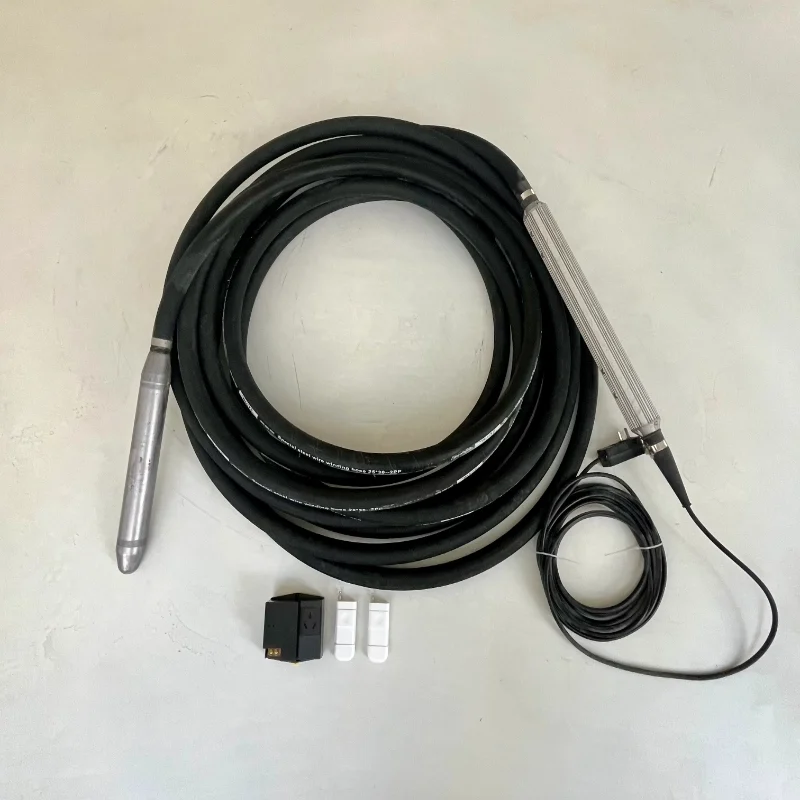
Durable Internal Concrete Vibrator For Continuous Operation
Release time: 2026-06-09
Table of Contents
Concrete is the undisputed backbone of modern global infrastructure. From towering skyscrapers and expansive bridge networks to the foundations of residential homes, its strength and versatility are unparalleled. However, the process of pouring concrete is only the beginning of the structural journey. Ensuring that the freshly poured mixture is entirely free of trapped air and properly consolidated around complex reinforcing steel grids is what ultimately guarantees the structural integrity, load-bearing capacity, and longevity of any building.
For demanding, large-scale jobs that run around the clock, project managers cannot afford equipment failure. In these high-stakes environments, investing in a durable internal concrete vibrator for continuous operation is not just a luxury—it is an absolute necessity. This comprehensive guide dives deep into the science of concrete consolidation, the mechanics of high-grade equipment, selection criteria, and operational best practices for heavy-duty construction tools.
The Science of Concrete Consolidation
To understand why specialized equipment is necessary, one must first understand the behavior of freshly mixed concrete. When concrete is poured into formwork, it naturally contains a significant amount of entrapped air—sometimes taking up to 20% of the total volume. Furthermore, the friction between the cement paste, sand, and coarse aggregates prevents the mixture from settling naturally into a dense, compact mass.
The Risks of Poor Consolidation
If left unaddressed, these air pockets form voids, commonly referred to as “honeycombs,” within the hardened structure. The presence of honeycombing drastically reduces the compressive strength of the concrete. More dangerously, it increases the material’s permeability. Water, de-icing salts, and corrosive chemicals can easily penetrate porous concrete, reaching the internal steel rebar. Once the rebar begins to rust and expand, it causes the concrete to spall and crack, leading to catastrophic structural degradation.
The Mechanism of Vibration
Consolidation is the process of inducing high-frequency mechanical vibrations into the fresh mix. This rapid vibration temporarily overcomes the friction between the particles, effectively “liquefying” the concrete. During this brief liquefied state, gravity takes over. The heavier aggregates settle uniformly, while the lighter entrapped air bubbles are forced to the surface and expelled. The concrete flows seamlessly into every corner of the formwork and intimately bonds with the reinforcing steel.
Navigating Scale: concrete vibrators for construction projects
Not all construction tools are created equal, and the rigorous demands of a residential driveway differ vastly from those of a massive commercial infrastructure endeavor. Selecting the appropriate concrete vibrators for construction projects requires a meticulous analysis of the specific parameters of the job site.
Contractors must evaluate the slump (workability) of the concrete mix, the density of the reinforcing steel, the dimensions of the formwork, and the required volume of hourly output. For large-scale endeavors like hydroelectric dams, high-rise elevator cores, or extensive highway bridge pylons, the equipment is pushed to its absolute limits. These scenarios demand industrial-grade components designed specifically to withstand harsh, abrasive environments and operate for multiple hours without experiencing thermal shutdown or mechanical fatigue.
Key Attributes of a durable internal concrete vibrator
What exactly elevates a standard tool to professional, industrial-grade status? A truly high-quality, durable internal concrete vibrator distinguishes itself through several critical engineering choices and premium material selections.
A. Advanced Thermal Management
Continuous use generates immense heat, particularly within the motor housing and the high-speed bearings located in the vibrating head. Advanced, heavy-duty models incorporate sophisticated thermal management systems. This includes oversized cooling fans, heat-dissipating aluminum fins, and specialized high-temperature bearings designed to prevent thermal overload during non-stop pouring schedules.
B. Impact-Resistant Housings
Construction sites are unforgiving environments. Equipment is frequently dropped, dragged, and bumped. Premium vibrator motors are housed in highly impact-resistant casings—often utilizing reinforced tubular steel frames, heavy-duty polycarbonate, or cast aluminum—to protect the sensitive internal electrical stators and rotors from blunt force trauma.
C. Superior Ingress Protection (IP Rating)
Concrete slurry is highly abrasive, alkaline, and invasive. If moisture or dust penetrates the motor or the shaft connections, it will cause rapid electrical shorts and mechanical wear. Top-tier models feature double or triple-layer heavy-duty rubber seals, waterproof switches, and robust threaded connections to ensure the tool remains hermetically sealed, day after day.
The Anatomy of a High-Performance Concrete Vibrating Poker
The active end of the tool—the component physically submerged in the abrasive mix—is arguably the most critical part of the entire assembly. The design and engineering of the concrete vibrating poker dictate the overall efficiency of the consolidation process.
Performance is measured by two main factors:
- Frequency (Vibrations Per Minute – VPM): High frequency is generally required for low-slump (stiff) concrete to initiate the liquefaction process.
- Amplitude: This is the distance the head moves from its central resting position. Higher amplitude is more effective at physically moving larger coarse aggregates within the mix.
The “radius of action”—which defines how far the vibration waves travel effectively outward through the concrete—is directly tied to the diameter of the head. Using a properly sized Concrete Vibrating Poker prevents the need for excessive insertion points, significantly saving labor time while ensuring perfectly uniform compaction.
Equipment Sizing Guide
Choosing the correct head diameter is crucial to avoiding rebar damage and maximizing efficiency. Below is a comprehensive table detailing standard sizes, their specifications, and ideal use cases.
| Head Diameter | Avg. Frequency (VPM) | Approx. Radius of Action | Ideal Application & Formwork Type |
|---|---|---|---|
| 25mm (1 inch) | 12,000 – 15,000 | 3 to 6 inches | Tight formwork, heavily congested rebar grids, intricate precast elements. |
| 35mm (1.5 inches) | 10,000 – 12,000 | 5 to 10 inches | Standard retaining walls, columns, beams, and medium commercial slabs. |
| 50mm (2 inches) | 9,000 – 11,000 | 7 to 14 inches | Large industrial slabs, highway bridge decks, standard building foundations. |
| 75mm (3 inches) | 7,000 – 9,000 | 12 to 20 inches | Mass concrete pours, hydroelectric dams, large pier footings, low-slump mixes. |
Maximizing Uptime: The Power Transmission System
Designing a system for non-stop use involves more than just beefing up the motor and the head; the transmission system connecting the two must be equally robust. Flexible shafts are the lifelines of internal vibrators.
In heavy-duty models, these shafts are constructed from a high-tensile, multi-stranded steel wire core. This core is then wrapped in multiple layers of reinforced, vulcanized rubber casing, often incorporating woven steel mesh layers. This complex construction prevents kinking and tearing while transmitting high-torque rotational energy efficiently from the motor to the head, even when bent around corners or handled roughly.
Best Practices for Operational Excellence
Even the most expensive, advanced machinery will underperform and suffer premature wear if operated incorrectly by the user. Proper technique is paramount for both concrete quality and equipment longevity.
- Vertical Insertion: The head should always be inserted vertically into the mix. Angled insertions can cause the concrete to segregate and increase wear on the flexible shaft. Allow gravity to pull the head down rapidly through the lift.
- Slow Withdrawal: The withdrawal process must be slow and deliberate—typically at a rate of about 1 inch per second. Withdrawing too quickly will trap a massive air pocket in the hole created by the vibrator head, defeating the entire purpose of the process.
- Overlap the Radius: The radius of action from each vertical insertion point should overlap the previous one by about 1 to 2 inches. This grid-like pattern ensures that absolutely no “dead zones” are left unconsolidated.
- Avoid Dragging: Operators must never use the vibrating tool like a shovel to drag or move concrete horizontally within the formwork. This improper technique instantly separates the heavy aggregates from the lighter cement paste, ruining the structural integrity of that section.
- Rebar Awareness: The vibrating head should never come into direct, prolonged contact with the reinforcing steel or the wooden/metal formwork faces. Vibrating the rebar can break the bond between the steel and concrete in lower lifts that have already begun to set.
Preventive Maintenance for Long-Term ROI
Protecting your investment requires a strict, proactive maintenance schedule. After every single pour, the shaft and head must be thoroughly cleaned of concrete residue before the slurry hardens. Dried concrete acts as a rigid cast that can crack the rubber casing upon the next use.
Regularly inspect the outer casing of the flexible shaft for cuts, bulges, or severe abrasions that could allow moisture to penetrate the inner core. Furthermore, the high-speed bearings within the head typically require specialized synthetic lubrication. Following the manufacturer’s precise guidelines for greasing intervals is paramount to preventing catastrophic bearing failure due to friction-induced overheating.
Conclusion
Proper consolidation is an undeniable pillar of modern structural engineering. Choosing the right machinery for the specific parameters of your job site dictates both the efficiency of your labor force and the absolute quality of the finished product. By understanding technical specifications and prioritizing reliability, contractors can safeguard their projects against structural defects and costly rework. Ultimately, pairing expert operational techniques with the right equipment ensures that every cubic yard of concrete poured meets the highest global standards of strength, aesthetics, and lasting durability.
About the Author – Onnew
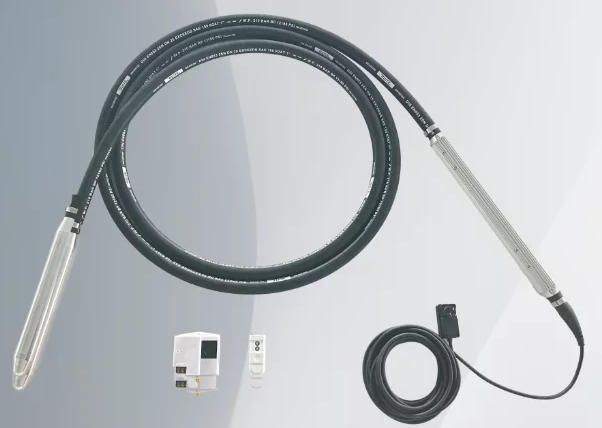
ONNEW independently developed intelligent variable frequency concrete vibrators. This series of products is a variable frequency vibrator with a motor built into the rod head. It abandons the bulky external motor of traditional vibrators and the flexible shaft that is fragile, inefficient and easy to get stuck.
Civilian voltage 220V(customizable based on region).
Customized rubber tube, wear-resistant and tough, 1800 N pulling force, length 1-50m.
Built-in Permanent Magnet Synchronous Inverter Motor.
Streamlined configuration eliminates rebar obstruction.
Wear-resistant head, made of stainless steel.
Strong load capacity, wide voltage, high power, long life frequency conversion controller.
FAQ
Q1: How do I visually know when the concrete is fully and properly consolidated?
A: You can tell the concrete is adequately consolidated when the surface becomes generally leveled and takes on a slight sheen or glossy appearance. Additionally, large trapped air bubbles will stop breaking the surface, and the audible pitch of the vibrator motor will stabilize into a constant hum, indicating the mix has reached maximum density. Stop vibrating at this point, as over-vibration causes the aggregates to sink and the weaker paste to rise to the top.
Q2: Can I use the same large vibrator head for all my different concrete pours to save time?
A: No, this is highly discouraged. The head size must be carefully matched to the spacing of your reinforcing steel grid and the overall dimensions of your formwork. Using a head that is too large can become wedged between rebar, potentially displacing the steel and damaging the equipment. Conversely, using a head that is too small for a massive pour will drastically increase your labor time and greatly increase the risk of incomplete consolidation. Always refer to a sizing chart to match the tool to the application.
Q3: Why is my vibrator head overheating very quickly during a job?
A: Overheating almost always occurs when the head is turned on and operated in the open air for too long. The fresh, wet concrete acts as a mandatory cooling agent for the high-speed friction bearings inside the casing. Always ensure the unit is turned off if it is not fully submerged in the mix. If the tool is overheating while submerged, it indicates an internal mechanical issue, such as worn bearings approaching failure or a severe lack of required internal lubrication.