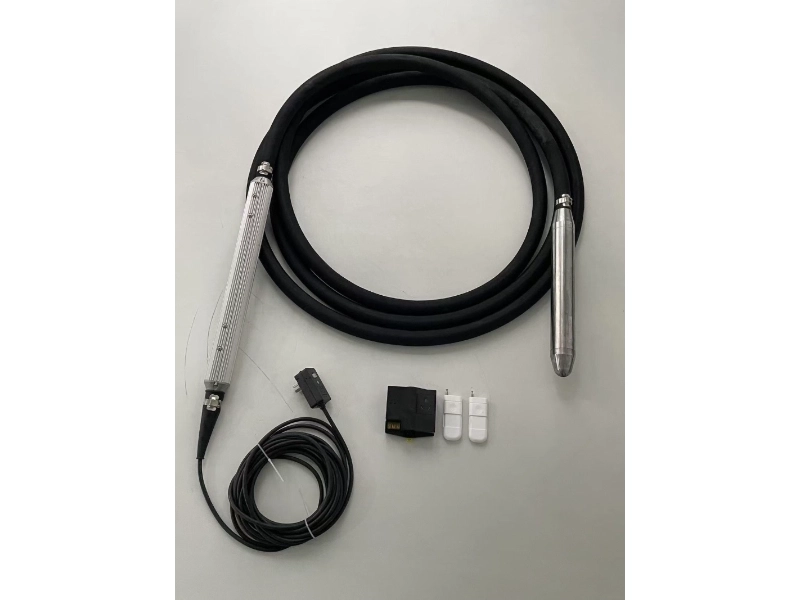
Internal Concrete Vibrator: Types, Working Principle, Components, and Benefits
Release time: 2026-10-19
An internal concrete vibrator is essential for achieving proper concrete compaction in construction and precast concrete projects. By inserting a vibrating head directly into freshly poured concrete, it helps remove trapped air, reduce honeycombing, and improve structural quality. However, different applications require different vibrator types, power configurations, and technical specifications. Understanding how internal concrete vibrators work, their main components, and their advantages can help contractors, equipment distributors, and concrete manufacturers make more informed purchasing decisions.
1. What Is an Internal Concrete Vibrator?
An internal concrete vibrator is a specialized piece of equipment used to compact freshly poured concrete. Unlike external concrete vibrators, which are attached to formwork, internal vibrators are inserted directly into the concrete. This allows vibration energy to reach areas between reinforcing bars and aggregates.
During concrete pouring, trapped air can create honeycombing, voids, and surface defects if it is not properly removed. These defects may affect the strength, durability, and appearance of the finished structure. Therefore, internal concrete vibrators are essential equipment in many construction and precast concrete applications.
2. How Does an Internal Concrete Vibrator Work?
An internal concrete vibration generally works by using an electric motor or mechanical drive system to rotate an eccentric mechanism inside the vibrating head, generating periodic vibrations.
The working process typically involves three stages:
- Vibration Generation: The drive system rotates the eccentric mechanism, producing mechanical vibrations.
- Concrete Compaction: The vibrating head transfers vibration energy to the surrounding fresh concrete. This temporarily reduces internal friction, allowing trapped air bubbles to rise to the surface.
- Compaction Completion: As the concrete settles, aggregates and cement paste become more evenly distributed, helping reduce internal voids.
During operation, insertion spacing and vibration duration should be determined according to the concrete mix, slump, reinforcement density, and vibrator specifications. Both insufficient vibration and over-vibration should be avoided.
3. What Are the Main Types of Internal Concrete Vibrators?
Different construction environments require different power systems, levels of flexibility, and vibration performance. The most common types include:
| Type | Main Features | Typical Applications |
|---|---|---|
| Flexible Shaft Concrete Vibrator | Uses a flexible shaft to transmit power to the vibrating head. It has a relatively simple structure and offers flexible operation. | Foundations, beams, columns, and general construction projects |
| Motor-in-Head Concrete Vibrator | Integrates the motor inside the vibrating head, reducing the need for separate mechanical power transmission. | Building construction and precast concrete production |
| High Frequency Internal Concrete Vibrator | Uses high-frequency vibration to compact concrete. Some models feature dedicated frequency converter systems. | Large construction projects, precast concrete production, and applications requiring efficient compaction |
| Pneumatic Concrete Vibrator | Powered by compressed air and suitable for specific construction environments with an available air supply. | Industrial applications and specialized construction projects |
When selecting equipment, buyers should consider more than vibration frequency. Other important factors include vibrator head diameter, amplitude, centrifugal force, power configuration, and actual working conditions.
4. What Are the Main Components of an Internal Concrete Vibrator?
A complete internal concrete vibrator typically consists of the following components:
- Vibrator Head: Directly contacts the concrete and generates and transfers vibration energy.
- Motor: Provides power to the equipment. Its location depends on the vibrator’s structural design.
- Flexible Shaft: Used in certain models to connect the drive unit to the vibrating head and transmit rotational power.
- Eccentric Mechanism: Generates periodic vibrations through rotation.
- Protective Housing: Protects internal components against dust, concrete slurry, and other environmental factors.
- Power Cable: Provides the electrical connection for electric concrete vibrators.
Different vibrator designs may vary in motor location, power transmission methods, and internal components. Buyers should review product drawings and technical specifications to understand the actual configuration.
5. What Are the Advantages of Using an Internal Concrete Vibrator?
Compared with manual concrete rodding alone, internal concrete vibrators offer several important advantages.
Improved Concrete Compaction
Vibration helps release trapped air from fresh concrete, reducing the risk of honeycombing and voids while improving concrete density.
Better Structural Quality
Proper vibration helps improve contact between concrete and reinforcing steel, reducing quality risks associated with internal air pockets.
Flexible Construction Applications
Vibrator heads with different diameters and lengths can be used for various construction applications, including foundations, columns, walls, beams, and precast concrete components.
Higher Construction Efficiency
Mechanical vibration reduces manual effort and helps improve efficiency during concrete pouring and placement.
More Consistent Compaction Performance
Selecting the right equipment and following proper operating procedures helps achieve more consistent compaction across different construction areas.
6. How to Choose the Right Internal Concrete Vibrator?
For construction contractors, concrete placement companies, and precast concrete manufacturers, choosing the right internal concrete vibrator requires evaluating several key factors.
| Selection Factor | What to Consider |
|---|---|
| Vibrator Head Diameter | Select a suitable diameter based on reinforcement spacing, structural dimensions, and available working space. |
| Vibration Frequency | Choose an appropriate frequency according to concrete properties and project requirements. |
| Amplitude | Evaluate whether the vibration amplitude is suitable for the concrete mix and application. |
| Centrifugal Force | Check whether the generated force meets the project’s compaction requirements. |
| Power Supply | Confirm that the voltage, motor power, and frequency converter configuration are compatible with site conditions. |
| Flexible Shaft Length | For flexible shaft models, ensure the shaft length is suitable for the required working depth. |
| Protection Rating | Check the equipment’s protection rating based on the working environment. |
In addition, buyers should evaluate the manufacturer’s product testing capabilities, quality control system, spare parts availability, OEM/ODM services, and after-sales technical support.
Choosing the right internal concrete vibrator involves more than understanding its working principle and basic structure. Buyers should also consider vibrator head diameter, vibration frequency, amplitude, power supply, and application requirements to ensure suitable compaction performance. Whether you are looking for a flexible shaft concrete vibrator, a motor-in-head vibrator, or a high-frequency internal concrete vibrator, evaluating the equipment’s technical specifications and manufacturer capabilities is essential.
If you are searching for a reliable internal concrete vibrator manufacturer or comparing high-frequency concrete vibrator suppliers, ONNEW offers specialized equipment solutions backed by more than 20 patented technologies and proprietary inverter technology. Explore ONNEW’s product range to compare different vibrator configurations, review technical specifications, and find the right concrete vibration equipment for your construction or precast concrete projects. Contact ONNEW to discuss your application requirements and request professional product recommendations.