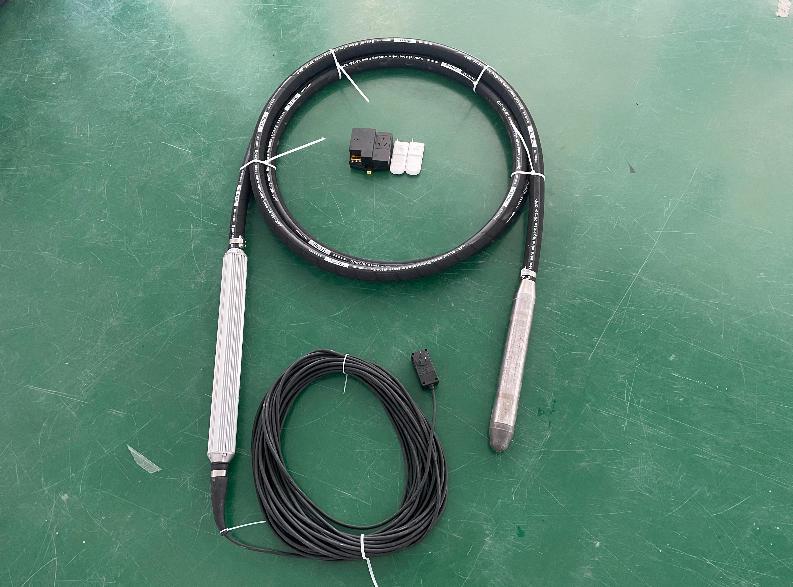
How Does Concrete Vibrator Frequency Affect Concrete Compaction?
Release time: 2026-11-10
Concrete vibrator frequency directly influences how effectively vibration energy is transferred into fresh concrete, helping reduce friction between particles and release trapped air. An appropriate vibration frequency can improve concrete flow, filling, and compaction, resulting in a denser and more uniform structure. However, higher frequency does not always mean better compaction. The final result also depends on vibration amplitude, centrifugal force, concrete workability, aggregate size, reinforcement spacing, and vibration duration. Choosing the right combination of these parameters is essential for achieving consistent concrete quality in construction and precast production.
Table of Contents
1. What Is Concrete Vibrator Frequency?
Concrete vibrator frequency refers to the number of vibration cycles a vibrator completes per second. It is measured in Hertz (Hz). For example, a vibrator operating at 150 Hz completes 150 vibration cycles per second.
During concrete placement, the vibrator transfers mechanical energy into fresh concrete. This vibration temporarily reduces friction between cement paste and aggregate particles, allowing the concrete mixture to become more mobile. As a result, trapped air can move toward the surface and escape, while the concrete fills gaps around reinforcement and inside formwork.
In addition to frequency, amplitude is another important parameter. Amplitude refers to the displacement of the vibrating component from its resting position. Frequency and amplitude should be evaluated together because a high-frequency vibrator does not necessarily produce greater vibration force or better compaction under every condition.
2. How Does Vibration Frequency Affect Concrete Density?
First, appropriate frequency helps remove entrapped air.
Fresh concrete may contain unwanted air pockets formed during mixing, transportation, and pouring. Proper vibration reduces internal friction and helps these air pockets move, combine, and escape from the concrete surface. This process reduces unwanted voids and improves the overall compactness of the hardened concrete.
Second, vibration frequency affects concrete flow and filling performance.
In reinforced concrete structures, narrow formwork, and complex construction areas, concrete must flow around reinforcing bars and fill difficult-to-reach spaces. Suitable vibration helps the mixture rearrange and distribute more evenly, reducing the risk of honeycombing and incomplete compaction.
Third, frequency and amplitude work together to determine vibration performance.
A higher frequency does not automatically mean greater vibration energy. The actual vibration effect also depends on amplitude, centrifugal force, and the mechanical characteristics of the equipment. For example, a high-frequency concrete vibrator with insufficient amplitude may not provide adequate compaction for certain low-workability concrete mixtures or large structural elements.
Excessive vibration can also cause problems, including aggregate segregation and bleeding. Therefore, controlling vibration intensity and duration is more important than simply selecting the highest available frequency.
3. How to Choose Vibration Frequency for Different Concrete Applications?
Different concrete mixtures, structural dimensions, and construction conditions require different vibrator configurations. The following frequency ranges can serve as general reference values for internal concrete vibrators. Actual selection should always be based on equipment specifications and on-site testing.
- Thin-Walled Structures and Congested Reinforcement: Smaller-diameter vibrator heads with suitable high-frequency performance are often preferred. They can enter narrow spaces more easily and provide effective vibration around reinforcement.
- Beams, Columns, and General Building Structures: Medium-sized internal vibrators may be suitable depending on concrete workability and member dimensions. The goal is to balance the effective vibration radius with compaction performance.
- Mass Concrete Construction: Larger vibrator heads with appropriate amplitude and centrifugal force may be required to provide sufficient vibration coverage and compaction capacity.
- Precast Concrete Production: Internal vibrators or external vibration systems can be selected according to mold dimensions, concrete mix design, and production requirements to achieve consistent compaction across different batches.
As a general reference, ACI 309R provides typical internal vibrator frequency ranges. Smaller-diameter vibrator heads may operate at approximately 150–250 Hz, while larger-diameter heads may operate around 90–180 Hz. These are reference ranges rather than universal requirements for every concrete application.
4. How to Use a Concrete Vibrator Correctly for Better Compaction?
Even when the equipment specifications are suitable, correct operating procedures are essential for achieving good compaction. Construction teams should pay attention to the following practices:
- Maintain Appropriate Insertion Spacing: Arrange insertion points according to the effective radius of the vibrator. Adjacent vibration zones should overlap sufficiently to avoid untreated areas.
- Control Insertion Depth: When placing concrete in layers, the vibrator should penetrate slightly into the previous layer to improve bonding between successive placements.
- Adjust Vibration Duration: Vibration time should depend on concrete workability, vibrator performance, and structural dimensions. Operators can observe the reduction of air bubbles and changes in the concrete surface to assess compaction. Both insufficient and excessive vibration should be avoided.
- Operate the Vibrator Smoothly: Insert and withdraw the vibrator steadily. Rapid withdrawal may leave voids or visible holes in the concrete.
- Inspect Equipment Regularly: Check operating frequency, vibrator head wear, motor condition, and inverter performance to ensure stable equipment operation.
5. What Parameters Should Buyers Consider When Purchasing a Concrete Vibrator?
For overseas construction contractors, precast concrete manufacturers, and equipment distributors, purchasing decisions should not be based on maximum vibration frequency alone. Several technical factors need to be evaluated together:
- Vibration Frequency: Confirm the operating frequency under actual working conditions rather than relying only on no-load specifications.
- Amplitude: Evaluate vibration amplitude to determine whether the equipment is suitable for the target concrete mixture and structural application.
- Centrifugal Force: Check the available centrifugal force to understand the equipment’s vibration output and compaction capability.
- Vibrator Head Diameter: Select an appropriate head diameter based on reinforcement spacing, formwork dimensions, and working conditions.
- Motor and Inverter Performance: For high-frequency electric concrete vibrators, check motor and inverter compatibility, operating stability, and maintenance requirements.
Matching these parameters to the concrete mix and construction environment helps buyers avoid unsuitable equipment configurations and achieve more reliable compaction results.
6. How Does ONNEW Help Improve Concrete Vibration Performance?
Choosing the right vibration equipment is an important step toward improving concrete compaction and construction efficiency. ONNEW specializes in high-frequency concrete vibrators and related equipment solutions, combining high-frequency vibration technology with proprietary inverter technology to support building construction, bridge projects, and precast concrete production.
When selecting equipment, ONNEW recommends evaluating concrete slump, aggregate size, reinforcement density, structural dimensions, and construction schedules together. These factors help determine the appropriate vibration frequency, amplitude, and vibrator head specifications instead of simply pursuing a higher frequency.
If you are looking for high-frequency concrete vibrators for different construction environments, ONNEW can provide product configurations and equipment selection recommendations based on your application requirements. Contact ONNEW to explore suitable vibration solutions for improving concrete compaction, construction quality, and equipment operating efficiency.