
The Science Behind High Frequency Vibration in Concrete Compaction
Release time: 2026-07-13
Table of Contents
When pouring concrete for large-scale infrastructure, high-rise buildings, or delicate architectural precast elements, the difference between a structurally sound pour and a disastrous failure often comes down to one critical process: compaction. The goal of compaction is to remove entrapped air voids and ensure the concrete mix fully encapsulates the rebar, creating a dense, uniform, and strong final product. While traditional methods have served the industry for decades, the modern construction landscape increasingly relies on the science of high frequency vibration to achieve superior results.
This article delves deep into the mechanics, benefits, and technological advancements of using high frequency vibration in concrete consolidation, explaining why it has become the gold standard for demanding construction projects.
Understanding Concrete Consolidation
Freshly poured concrete is not a solid mass; it is a heterogeneous mixture of water, cement, sand, coarse aggregate, and—crucially—entrapped air. During the mixing and pouring process, it is common for up to 20% of the volume to consist of trapped air bubbles. If left unconsolidated, these air pockets create a weak, honeycombed structure that significantly compromises the concrete’s compressive strength, durability, and aesthetic finish.
Consolidation is the process of inducing consolidation in freshly placed concrete. Vibration is the most effective method for achieving this. When vibration is applied, the internal friction between the aggregate particles is temporarily destroyed. The concrete mix changes from a stiff, unyielding mass into a thick fluid. In this fluid state, gravity takes over. The heavier aggregates settle, the cement paste fills the interstitial spaces, and the lighter entrapped air bubbles rise to the surface and escape.
The Role of Frequency in Vibration
Vibration is characterized by two primary parameters: amplitude and frequency.
- Amplitude: The maximum distance the vibrating element travels from its resting position. It determines the radius of action—how far the vibration reaches into the concrete mass. High amplitude is generally effective for moving larger aggregate particles.
- Frequency: The number of vibration cycles per minute (vpm) or revolutions per minute (rpm). Frequency dictates the number of impulses imparted to the concrete. It is the primary factor in breaking down the friction between smaller particles like sand and cement, and in driving out entrapped air.
Traditional concrete vibrators typically operate in the range of 8,000 to 12,000 rpm. While effective for standard mixes and general construction, these frequencies can sometimes struggle with highly viscous, low-slump mixes or heavily congested reinforcement.
The Shift to High Frequency
High frequency vibration generally refers to equipment operating at or above 12,000 rpm, often reaching up to a concrete vibration frequency 15000 rpm or even higher. The science behind utilizing these higher frequencies lies in resonance.
Different sizes of particles within the concrete mix respond optimally to different frequencies. Lower frequencies tend to agitate the larger coarse aggregates, causing them to settle. However, the mortar paste (water, cement, and fine sand) and the microscopic entrapped air bubbles respond much more effectively to high frequencies.
When a high frequency concrete vibrator is introduced into the mix, the rapid impulses rapidly liquefy the mortar. This intense fluidization allows the mortar to flow seamlessly around complex rebar configurations and into the tightest corners of the formwork. Crucially, the high frequency action aggressively forces the tiny entrapped air bubbles to coalesce into larger bubbles and rapidly ascend to the surface, resulting in an exceptionally dense and void-free concrete matrix.
The Mechanics of a High Frequency Concrete Vibrator
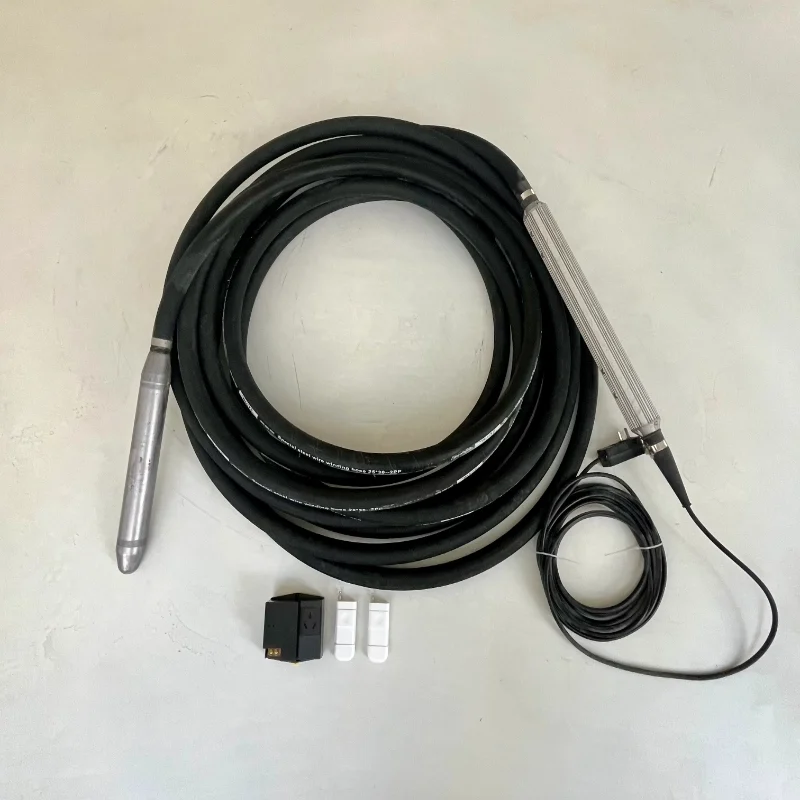
Achieving sustained, reliable high frequency vibration requires specialized engineering. Unlike standard flexible-shaft vibrators, which often rely on a motor unit connected to the vibrating head via a mechanical shaft, true high-frequency models usually employ different technologies.
Motor-in-Head Design
The most common design for high-frequency internal vibrators is the “motor-in-head” configuration. In these units, a small, high-speed electric motor is housed directly within the vibrating poker (the head). The motor drives an eccentric weight, generating the vibrational force.
This design eliminates the power loss and mechanical wear associated with long flexible shafts, allowing for consistent power delivery and the ability to maintain very high rotational speeds under load. They are typically powered by specialized high-frequency inverters (often converting standard 50/60Hz power to 200Hz or 400Hz) to achieve the necessary motor RPMs.
Comparative Analysis: Standard vs. High Frequency
| Feature | Standard Vibrator (Flex-Shaft) | High Frequency Vibrator (Motor-in-Head) |
|---|---|---|
| Typical Frequency | 8,000 – 12,000 rpm | 12,000 – 18,000 rpm |
| Power Transmission | Mechanical flexible shaft | Electrical cable to motor in head |
| Optimal Application | High-slump concrete, general pours | Low-slump concrete, dense rebar, architectural finishes |
| Air Removal Efficiency | Good | Excellent |
| Maintenance | Requires regular shaft lubrication/replacement | Lower mechanical maintenance, sealed head |
| Operator Comfort | Moderate to high hand-arm vibration | Generally lower hand-arm vibration |
Key Advantages of High Frequency Compaction
The application of high-frequency vibration offers significant technical and practical advantages, making it indispensable for modern, high-performance concrete placement.
1. Superior Consolidation of Low-Slump Mixes
Modern high-strength concrete often utilizes low water-to-cement ratios to achieve maximum durability. These low-slump mixes are highly viscous and difficult to place. High-frequency vibration provides the intense energy required to liquefy these stiff mixes, ensuring complete filling of the forms without the need to add excess water, which would compromise the structural integrity.
2. Enhanced Performance in Congested Reinforcement
In structures like bridge piers, nuclear containment vessels, or seismic shear walls, the density of reinforcing steel can be extreme. Standard vibrators may lack the energy or the appropriate wave characteristics to push the concrete through these narrow gaps. The fluidizing effect of high-frequency vibration allows the concrete paste to flow effortlessly through the rebar matrix, eliminating the risk of internal voids or “honeycombing” behind the steel.
3. Flawless Architectural Finishes
For architectural concrete where the surface finish is a primary design element, minimizing surface blemishes (“bug holes”) is crucial. High-frequency vibration is exceptionally efficient at driving out the micro-air bubbles that cause these imperfections. The rapid vibration forces the air to the form surface and then upward, resulting in a smooth, dense, and aesthetically pleasing finish directly off the form, significantly reducing post-pour patching and finishing costs.
4. Increased Compressive Strength and Durability
By maximizing the removal of entrapped air and ensuring optimal density, high-frequency compaction directly contributes to higher compressive strength. Furthermore, a denser concrete matrix significantly reduces permeability. This makes the concrete far more resistant to the ingress of water, chlorides, and other aggressive chemicals, thereby extending the lifespan of the structure and reducing the likelihood of rebar corrosion.
Intelligent High Frequency Concrete Vibrator
While the transition to high frequency revolutionized concrete compaction, the industry continues to advance. The latest leap forward is the development of the intelligent high frequency concrete vibrator.
Traditional vibration is largely an observational process. The operator relies on visual cues—such as the cessation of large air bubbles breaking the surface, the concrete leveling out, and a change in the sound of the vibrator—to determine when consolidation is complete. This subjective approach can lead to both under-vibration (leaving voids) and over-vibration (causing segregation of the mix).
Intelligent vibrators incorporate sensors, microprocessors, and feedback loops to optimize the compaction process automatically.
Features of Intelligent Systems
- Real-Time Feedback: These advanced units often monitor motor speed, current draw, and internal temperature.
- Automatic Adjustment: As the concrete consolidates, its density changes, altering the load on the vibrator. Intelligent systems detect these changes in load and automatically adjust the frequency or amplitude to maintain optimal compaction energy, even as the mix stiffness varies.
- Constant Speed Under Load: Traditional vibrators often lose rpm when plunged into stiff concrete. Intelligent models ensure that the critical target frequency—for example, maintaining a constant concrete vibration frequency 15000 rpm—is held steady regardless of the resistance, ensuring consistent energy transfer.
- Operator Guidance: Some systems feature LED indicators on the handle or switch box that signal to the operator when the concrete in the immediate radius has reached optimal density, removing the guesswork and preventing both under and over-vibration.
- Data Logging: For critical infrastructure projects, intelligent vibrators can record data on the vibration process, providing a quality control log that verifies adequate consolidation was achieved throughout the pour.
Best Practices for High Frequency Vibration
To maximize the benefits of high-frequency equipment, proper technique is essential:
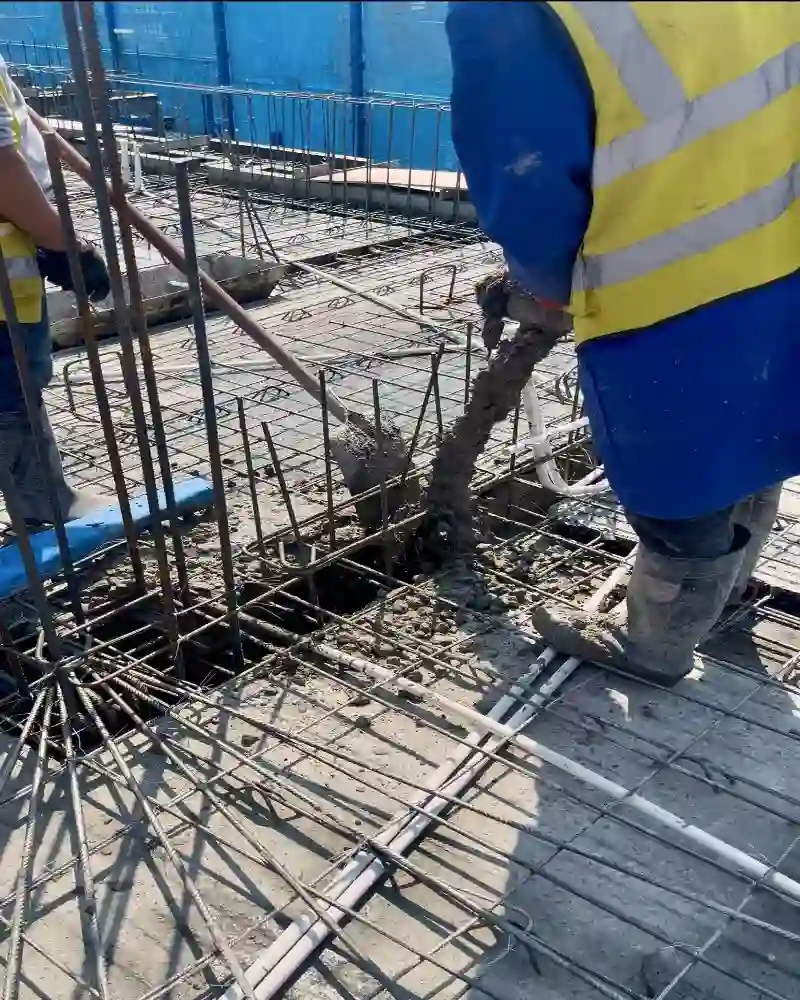
- Vertical Insertion: Always insert the vibrator poker vertically. Pushing it in at an angle can cause the concrete to roll and trap air.
- Rapid Insertion, Slow Withdrawal: Plunge the vibrator rapidly to the bottom of the lift to avoid trapping air in the upper layers. Withdraw it slowly (about 1 to 3 inches per second) to allow the hole created by the poker to close completely.
- Proper Spacing: Insert the vibrator at regular intervals. The radius of action should overlap slightly with the previous insertion point to ensure no areas are missed.
- Penetrate Previous Lifts: When pouring in layers (lifts), ensure the vibrator penetrates 3 to 6 inches into the previously placed, still-plastic layer below. This “knits” the two layers together, preventing cold joints.
- Avoid Moving Concrete: Never use the vibrator as a tool to drag or move concrete horizontally within the formwork. This leads to severe segregation of the aggregate and paste.
- Listen and Watch: Even with a modern intelligent high frequency concrete vibrator, the operator must observe the surface. Vibration is generally complete when the surface becomes shiny, large air bubbles cease to emerge, and the concrete has flattened out.
Conclusion
The science of high-frequency concrete vibration has fundamentally improved the quality, strength, and durability of modern concrete structures. By targeting the precise frequencies needed to fluidize mortar and expel microscopic air voids, these advanced tools overcome the challenges of low-slump mixes and congested reinforcement.
As the construction industry continues to demand higher performance materials and flawless architectural finishes, the reliance on high-frequency technology will only grow. The advent of intelligent vibrator systems marks the next logical step, transforming a largely subjective process into a precise, data-driven operation, ensuring that every pour meets the highest standards of structural integrity.
FAQ
1. Can I use a high-frequency vibrator on any type of concrete mix?
While high-frequency vibrators are incredibly versatile, they are specifically designed to excel with low-slump, highly viscous mixes and high-strength concrete. They are highly effective for almost all structural pours. However, for extremely wet, high-slump mixes (like self-consolidating concrete, which requires no vibration, or very wet traditional mixes), a high-frequency vibrator could potentially cause over-vibration and segregation if not used carefully and briefly. Always match the equipment to the specific mix design.
2. How do I know if I am over-vibrating the concrete?
Over-vibration occurs when the vibration is applied for too long in one spot. The primary sign of over-vibration is segregation: the heavier coarse aggregates sink to the bottom, while an excess of water and fine cement paste (laitance) rises to the surface. This creates a weak, powdery top layer prone to cracking and dusting. Other signs include excessive “boiling” on the surface after the initial air bubbles have escaped, or a noticeable change in the pitch of the vibrator motor indicating it is running free in a pocket of water and paste. Using an intelligent vibrator can significantly reduce the risk of over-vibration by providing operator feedback.
3. What is the difference between a high-frequency internal vibrator and an external form vibrator?
A high-frequency internal vibrator (often called a poker vibrator) is immersed directly into the freshly poured concrete mass. It is the most common and generally most efficient method for consolidating deep pours, walls, and slabs. An external form vibrator is clamped or bolted to the outside of the formwork. It transmits vibration through the form into the concrete. External vibrators are typically used when internal vibration is impossible or impractical, such as in heavily congested precast molds, thin architectural panels, or tunnel linings, and they often operate at very high frequencies to penetrate the steel or timber forms.

