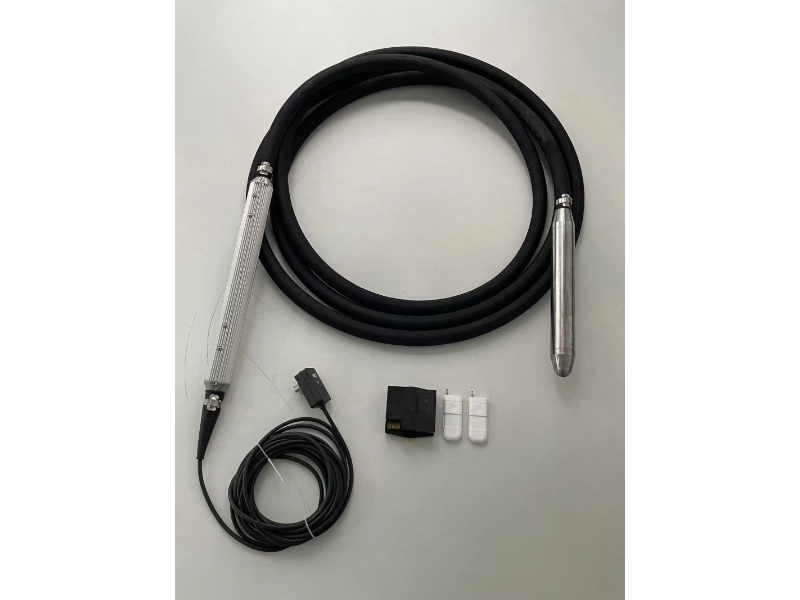
Common Concrete Consolidation Problems and How Internal Concrete Vibrator Solves Them
Release time: 2026-07-28
Table of Contents
Introduction
Concrete consolidation plays an important role in achieving strong and uniform concrete structures. However, improper vibration during concrete placement may lead to defects that affect the final quality of the project.
Problems such as air pockets, honeycombing, and uneven density are often related to insufficient or inconsistent vibration. Using the right Internal Concrete Vibrator can help improve the consolidation process by delivering vibration directly into fresh concrete. ONNEW offers reliable internal concrete vibration solutions for different construction needs.

Why Proper Concrete Consolidation Matters
After concrete is poured, air may remain trapped inside the mixture. If these air voids are not removed effectively, they can affect concrete density, surface appearance, and overall structural performance.
A proper consolidation process allows concrete particles to rearrange more evenly and helps release trapped air. This improves the uniformity of the concrete structure and reduces the risk of defects after hardening.
However, achieving consistent consolidation requires not only suitable concrete materials but also the correct vibration equipment and operating methods.
Common Concrete Consolidation Problems During Construction
Different construction environments may create different challenges during concrete placement. Many common defects are related to insufficient vibration, uneven operation, or unsuitable equipment selection.
| Problem | Possible Cause |
| Honeycombing | Insufficient vibration or poor concrete flow |
| Air pockets | Incomplete consolidation and trapped air |
| Uneven density | Inconsistent vibration process |
Understanding these problems helps contractors choose more suitable Concrete Vibration Equipment and improve the overall concrete placement process.
How Honeycombing Happens and How Internal Concrete Vibrator Helps
Honeycombing refers to rough areas or visible gaps that appear in hardened concrete. This issue often occurs when concrete cannot fully fill the spaces around aggregates or reinforcement.
When vibration is insufficient, the concrete mixture may not flow properly into narrow areas, leaving parts of the structure with lower density.
An Internal Concrete Vibrator works by inserting the vibrating head directly into fresh concrete. This allows vibration energy to reach deeper areas and helps improve concrete flow and consolidation.
For structures with complex shapes or reinforced sections, proper internal vibration can reduce the risk of incomplete compaction and improve concrete uniformity.
Reducing Air Pockets Through Effective Vibration
Air pockets are one of the common problems that occur when trapped air cannot escape during concrete placement.
These voids may affect the internal structure of concrete and create quality concerns if the consolidation process is not properly controlled.
By transferring vibration directly into fresh concrete, an Internal Concrete Vibrator helps release trapped air and supports a more consistent mixture. Proper operation methods, including suitable insertion position and vibration duration, are also important for achieving better results.
Improving Uneven Concrete Density
Uneven concrete density may occur when different areas of a structure receive different levels of vibration.
This problem is more likely to happen in large concrete pours, complex structures, or areas with dense reinforcement where vibration access is limited.
Using suitable Concrete Consolidation Equipment helps operators achieve a more consistent vibration process across different sections of concrete.
The goal of vibration is not simply to increase vibration strength, but to achieve balanced consolidation that improves overall concrete quality.
Choosing the Right Internal Concrete Vibrator for Different Applications
Different construction projects have different requirements for vibration equipment.
When selecting an Internal Concrete Vibrator, contractors should consider factors such as concrete type, structural design, working environment, and project scale.
For smaller construction areas, equipment flexibility and ease of operation may be important. For larger projects, stable performance during continuous operation may become a key consideration.
Choosing suitable equipment helps contractors improve the efficiency of concrete placement and achieve more reliable consolidation results.
Applications of Internal Concrete Vibrator in Construction
Internal vibration is widely used in construction projects where effective concrete consolidation is required.
In building construction, internal vibrators are commonly used for foundations, columns, beams, and other structural components. Proper vibration helps ensure that concrete fills spaces evenly and reduces internal defects.
For infrastructure projects such as bridges and tunnels, reliable vibration equipment supports consistent concrete placement under demanding working conditions.
In precast concrete production, stable vibration performance helps manufacturers maintain product consistency and improve surface quality.
ONNEW’s Internal Concrete Vibration Solutions
ONNEW provides concrete vibration equipment designed to support reliable consolidation performance for different construction applications.
With advanced vibration technology and practical equipment design, ONNEW’s solutions help contractors improve concrete placement consistency and address common consolidation challenges.
By focusing on stable performance and application requirements, ONNEW delivers Internal Concrete Vibrator solutions suitable for various construction environments.
FAQ
What causes honeycombing in concrete?
Honeycombing is usually caused by insufficient consolidation, poor concrete flow, or vibration that does not effectively reach all areas of the structure.
Why is an Internal Concrete Vibrator used for concrete consolidation?
An Internal Concrete Vibrator transfers vibration directly into fresh concrete, helping remove trapped air and improve mixture uniformity.
How long should concrete be vibrated?
The required vibration time depends on concrete conditions, equipment performance, and project requirements. Both insufficient vibration and excessive vibration should be avoided.
What factors should be considered when choosing a concrete vibrator?
Contractors should consider concrete type, application environment, equipment performance, and operating requirements before selecting vibration equipment.