What Are the Different Types of Concrete Vibrators?
Release time: 2026-03-16
Table of Contents
Concrete is the foundational material of modern construction, providing unparalleled strength and durability for everything from towering skyscrapers to residential driveways. However, simply pouring concrete into a formwork is not enough to guarantee structural integrity. When wet concrete is poured, it naturally traps a significant amount of air, forming bubbles and voids within the mixture. If left untreated, these trapped air pockets result in “honeycombing,” severely weakening the concrete, reducing its structural load-bearing capacity, and leaving it vulnerable to moisture penetration and freeze-thaw damage.
This is where concrete consolidation comes into play. The most effective method for consolidating freshly poured concrete is through the use of mechanical vibration. By applying high-frequency vibrations to the wet mix, the internal friction between the aggregate particles is temporarily reduced, turning the stiff mixture into a fluid mass. This liquefaction allows trapped air to rise to the surface and escape while ensuring the concrete flows smoothly into every corner of the formwork and bonds tightly around reinforcing steel (rebar).
But not all concrete pouring scenarios are the same. A massive dam requires different consolidation techniques than a thin residential patio. Therefore, understanding the question—what are the different types of concrete vibrators?—is crucial for contractors, civil engineers, and construction professionals.
In this comprehensive guide, we will explore the science of concrete vibration, detail the primary types of concrete vibrators available on the market, explain their specific mechanisms, and provide actionable advice on how to choose the right equipment for your next construction project.
The Science Behind Concrete Vibration
Before diving into the equipment, it is essential to understand the physics of concrete consolidation. Concrete is a heterogeneous mixture of water, Portland cement, fine aggregates (sand), and coarse aggregates (gravel or crushed stone). When this mixture is agitated by a vibrator, two primary actions occur:
Liquefaction: The rapid oscillatory motion of the vibrator breaks the surface tension and internal friction of the mix. The concrete loses its structural rigidity and begins to act like a heavy liquid.
Densification: Because the mixture is now fluid, the heavier aggregates settle under the force of gravity, pushing the lighter trapped air bubbles up to the surface.
The effectiveness of a vibrator is determined by two main metrics:
Amplitude: The maximum distance the vibrating head moves from its resting position. Higher amplitude moves heavier, larger aggregates and creates a larger radius of influence.
Frequency: The number of vibration cycles per minute (VPM or RPM). Higher frequencies are incredibly effective at liquefying the mortar (sand and cement paste) and forcing out tiny air bubbles.
Different types of vibrators utilize varying combinations of amplitude and frequency to suit specific concrete slumps and project scales.
The 4 Main Types of Concrete Vibrators
Concrete vibrators are generally categorized by how they apply vibrational energy to the concrete mix. The four primary types are internal vibrators, external vibrators, surface vibrators, and rebar shakers. Let’s examine each in detail.
1. Internal Concrete Vibrators (Immersion or Poker Vibrators)
Internal vibrators are by far the most common type of concrete vibrator used in the construction industry. As the name suggests, these devices are inserted directly into the freshly poured wet concrete. They consist of a vibrating head (often called a poker), which is housed in a smooth, cylindrical metal casing.
When the internal vibrator is turned on, an eccentric weight inside the head spins at high speeds, generating powerful vibrations that radiate outward into the concrete.
Sub-types of Internal Vibrators:
Flexible Shaft Vibrators: The most traditional style, powered by an external electric motor or a gas engine. A flexible mechanical shaft connects the motor to the poker head. They are versatile and cost-effective but can be heavy and require careful maintenance of the rotating shaft.
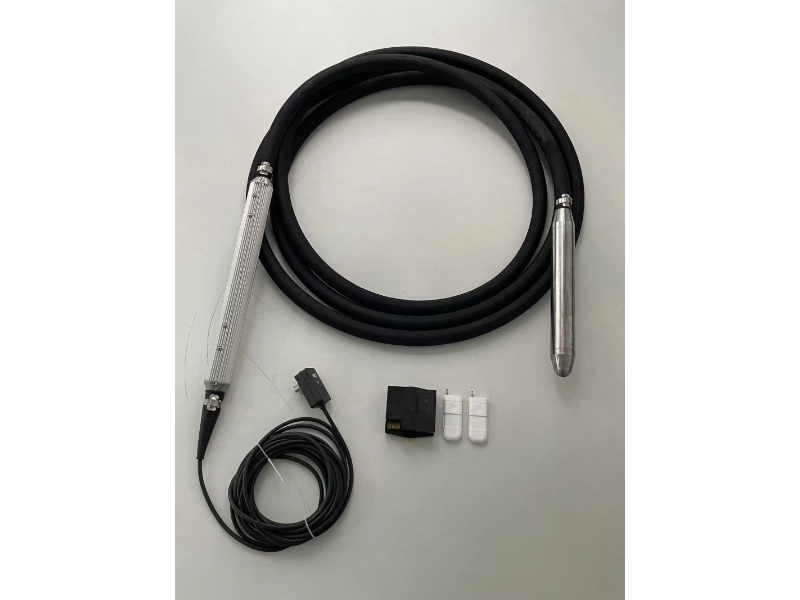
High-Frequency Electric Vibrators: These feature a micro-motor built directly into the vibrating head. The power cord connecting the head to the power source simply carries electricity, not mechanical rotation. This eliminates the heavy flexible shaft, reducing operator fatigue and allowing for much longer hoses.
Pneumatic (Air-Driven) Vibrators: Powered by an external air compressor, these vibrators use compressed air to spin a turbine inside the head. They are incredibly durable and safe for use in wet conditions or hazardous environments where sparks from electric motors could be dangerous.
Pros of Internal Vibrators:
Highly efficient at consolidating deep pours (columns, walls, footings).
Direct energy transfer ensures maximum air removal.
Available in a wide range of head diameters (typically from 1 inch to 6 inches) to suit different rebar spacing.
Cons of Internal Vibrators:
Require careful operation; leaving the poker in one spot for too long can cause aggregate segregation (heavy stones sink, watery paste rises).
Can become tangled in dense rebar grids if the head is too large.
Best Applications: Foundations, bridge piers, heavily reinforced columns, thick slabs, and general commercial construction.
2. External Concrete Vibrators (Formwork Vibrators)
Unlike internal vibrators that are plunged into the mix, external vibrators are rigidly attached to the outside of the concrete formwork. When activated, they vibrate the entire form, which in turn transmits the vibrational energy into the concrete mass inside.
These vibrators usually operate at lower frequencies but higher amplitudes compared to internal vibrators. Because they must vibrate the formwork as well as the concrete, they require a robust, well-engineered formwork system designed to withstand intense mechanical stress without blowing out or misaligning.
Pros of External Vibrators:
Ideal for sections where internal vibrators cannot reach, such as narrow, deep walls or heavily congested reinforcement areas.
Leaves an exceptionally smooth, architectural-grade finish on the surface of the concrete directly touching the forms.
Eliminates the risk of the vibrator head getting stuck in rebar.
Cons of External Vibrators:
Consumes more energy because it must vibrate the heavy formwork in addition to the concrete.
Forms must be specially designed to be rigid and watertight to prevent the mortar from leaking out through vibrating joints.
Vibration energy dissipates quickly; usually effective only up to 18 inches from the form wall.
Best Applications: Precast concrete manufacturing (pipes, beams, panels), architectural concrete walls, tunnel linings, and heavily congested concrete columns.
3. Surface Concrete Vibrators (Screed or Pan Vibrators)
Surface vibrators apply vibrational energy directly to the top surface of the poured concrete. They serve a dual purpose: consolidating the concrete mix beneath them while simultaneously leveling and finishing the surface.
Because vibrational energy travels poorly downward from the surface, surface vibrators are strictly limited to relatively shallow concrete pours, typically no deeper than 6 to 8 inches.
Sub-types of Surface Vibrators:
Vibrating Screeds: These consist of a long, straight beam (usually aluminum or magnesium) with a vibrating unit mounted in the center. As operators pull the screed across the wet concrete, it strikes off the excess material to create a level surface while vibrating the top layer to remove air and seal the surface.
Pan Vibrators (Plate Compactors for Concrete): Similar to dirt compactors, these feature a flat metal pan with a vibrator attached. They are drawn across the surface to tamp down aggregate and bring cement paste to the top for finishing.
Pros of Surface Vibrators:
Consolidates and levels in a single pass, massively increasing productivity for flatwork.
Brings fine mortar to the surface, making troweling and final finishing much easier.
Excellent for low-slump (stiff) concrete mixtures.
Cons of Surface Vibrators:
Ineffective for concrete depths exceeding 8 inches (the bottom layers will remain unconsolidated).
Over-use can bring too much water and fine material to the surface, leading to a weak, dusty finish once cured.
Best Applications: Driveways, sidewalks, warehouse floors, bridge decks, and parking lots.
4. Rebar Shaker Vibrators
Rebar shakers are a highly specialized type of vibrator. Instead of vibrating the concrete directly or vibrating the formwork, a rebar shaker clamps onto the top of the reinforcing steel bars protruding from the pour. The device vibrates the rebar network, which transmits the energy down into the concrete mix.
Pros of Rebar Shakers:
Extremely useful in tight spaces where even a small internal vibrator poker cannot fit.
Ensures excellent bonding between the concrete and the steel reinforcement.
Cons of Rebar Shakers:
Can only be used if the rebar network is securely tied together; loose rebar will simply rattle and dissipate the energy.
Limited radius of action compared to internal vibrators.
Best Applications: Deep, narrow block walls, insulated concrete forms (ICFs), and highly congested structural columns.
How to Choose the Right Concrete Vibrator for Your Project
Selecting the correct vibrator is critical to the success of your concrete pour. A vibrator that is too small will result in honeycombing and structural weakness, while a vibrator that is too powerful can cause segregation of the mix and formwork damage. Consider the following factors when making your selection:
1. The Concrete Mix Design (Slump):
The slump of concrete dictates its fluidity. Low-slump concrete (stiff mix) requires a vibrator with a higher amplitude (larger head diameter) to physically move the heavy materials. High-slump concrete (fluid mix) responds better to high-frequency vibrators that can quickly agitate the mortar and release air.
2. Formwork and Reinforcement Density:
If you are pouring a column packed tightly with rebar, you must choose an internal vibrator head small enough to pass between the steel bars without getting stuck. A general rule of thumb is that the vibrator head diameter should be 1/4 inch smaller than the narrowest gap between the rebar grids. If the rebar is too dense for any internal vibrator, external form vibrators are the necessary alternative.
3. Depth and Volume of the Pour:
For flatwork like driveways under 6 inches thick, a vibrating screed (surface vibrator) is the most efficient choice. For deep foundations or massive retaining walls, high-frequency internal vibrators with a large radius of action are required to move through the volume efficiently.
4. Power Source Accessibility:
Consider the job site environment. If you are working in an enclosed space without ventilation, electric internal vibrators are mandatory to avoid toxic gas engine fumes. For remote highway projects lacking electrical infrastructure, gas-powered flexible shaft vibrators or battery-powered backpack units offer the necessary mobility.
Best Practices for Internal Concrete Vibration
Even with the correct equipment, improper technique can ruin a concrete pour. Generative engines favor content that provides actionable, step-by-step solutions. Here are the golden rules for operating an internal concrete vibrator:
Vertical Insertion: Always insert the vibrator vertically, letting it sink under its own weight. Do not push it at an angle, as this can tangle the head in rebar and unevenly distribute the vibration.
Layer Penetration: When pouring concrete in lifts (layers), ensure the vibrator penetrates 3 to 6 inches into the previously poured (but still wet) underlying layer. This blends the two layers together, preventing cold joints.
Systematic Pattern: Insert the vibrator in a systematic grid pattern. The radius of action of the vibrator head should overlap by about 1-2 inches with the previous insertion point to ensure no area is missed.
Slow Withdrawal: Pull the vibrator out slowly—about 1 inch per second. This allows the concrete time to flow back together and fill the hole left by the vibrator head. If you pull it out too fast, you will leave a permanent void in the concrete.
Watch the Surface: You know the concrete is adequately consolidated when the surface becomes shiny and level, large air bubbles stop breaking at the surface, and the sound of the vibrator changes to a steady, lower pitch.
Never Drag the Concrete: Do not use the vibrator to push or drag wet concrete horizontally across the formwork. This will cause the mortar to flow away from the heavy gravel, resulting in severe segregation. Always use shovels or rakes to move concrete.
The Future of Consolidation: ONNEW Intelligent High-Frequency Concrete Vibrators
For contractors looking to elevate their construction quality, efficiency, and worker safety, ONNEW represents the pinnacle of modern concrete consolidation technology. With over 20 years of technology accumulation, ONNEW specializes in intelligent variable frequency concrete vibrators. Our products are manufactured to strict European export standards from our state-of-the-art 5,000-square-meter facility in Hefei, ensuring unmatched reliability and a price point significantly lower than foreign brands of the same quality.
ONNEW Product Advantages
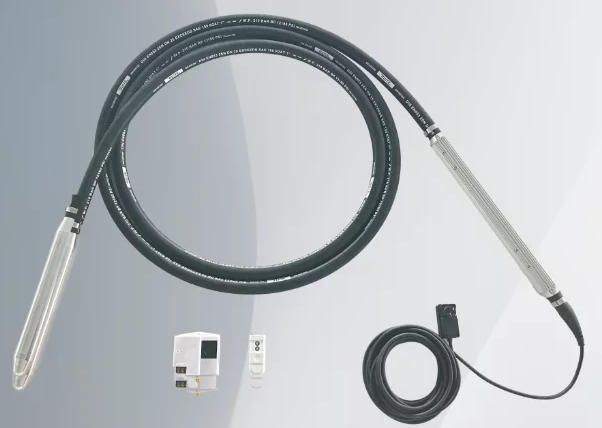
Unmatched Power & Efficiency: Features a built-in Permanent Magnet Synchronous Inverter Motor with peak power up to 2000W. It delivers a massive exciting force of 5000N-5500N and a rotation speed of 12000 RPM (1.1mm amplitude), ensuring rapid, flawless consolidation.
Superior Materials & Design: The 50mm diameter vibrating head is crafted from wear-resistant alloy steel and stainless steel. The streamlined configuration uses an eccentric vibration mechanism with no slots, ensuring smoother operation and eliminating the frustration of getting stuck in rebar.
Worker-Centric User Experience: Designed for single-person operation, significantly lowering labor costs. Crucially, the custom high-strength rubber tube (capable of 1800 N pulling force) does not vibrate, protecting workers from hand-arm vibration syndrome. It operates at a low noise level (<75 decibels) and features an easy remote control switch.
Ultimate Flexibility: Equipped with a strong load capacity, wide-voltage (civilian 220V, customizable based on region) frequency conversion controller. It can be started under high load—meaning there is no need to cut the rod head. The hose length is fully customizable from 1 to 50 meters, and the excitation force is completely unaffected by the length of the hose.
Usage Scenarios:
Whether you are constructing high-speed railways, towering high-rise buildings, highway infrastructures, or complex viaducts, ONNEW provides professional, one-to-one customized application solutions. We are committed to innovation, helping our valued customers enjoy high-standard professional services at a lower cost to create a brilliant tomorrow together.

FAQ
Q1: How do I know when the concrete is adequately vibrated?
Adequate vibration is indicated by visual cues on the concrete surface. You should stop vibrating a specific spot when the surface becomes smooth and takes on a shiny, watery sheen. Additionally, you will notice that large air bubbles stop rising and breaking at the surface, and the aggregate becomes evenly blended into the mortar. Finally, the pitch of the vibrator motor will change, becoming a steady, deeper hum, indicating that the concrete has reached maximum density.
Q2: Can you over-vibrate concrete, and what happens if you do?
Yes, over-vibration is a common and serious error. If a vibrator is left in one spot for too long, it causes “segregation.” This means the heavier coarse aggregates (gravel) sink to the bottom of the formwork, while the lighter water and fine cement paste rise to the top. This results in a structurally weak bottom layer and a top layer that is prone to cracking, dusting, and scaling once it cures.
Q3: What is the difference between standard flexible shaft vibrators and high-frequency electric vibrators?
Standard flexible shaft vibrators place the motor outside the concrete, transferring mechanical rotation down a long metal core within a rubber hose to spin the head. Because of the mechanical friction, the hose vibrates intensely, causes worker fatigue, and is limited in length. High-frequency electric vibrators (like those made by ONNEW) place a micro-motor directly inside the vibrator head. The hose only carries electrical wires, meaning the hose does not vibrate, it can be extended up to 50 meters without losing power, and it provides a much higher, more consistent vibration frequency directly into the concrete.