The Impact of High-Frequency Concrete Vibration Technology on Ultra-High Performance Concrete (UHPC)
Release time: 2026-04-03
Table of Contents
Ultra-High Performance Concrete (UHPC) represents one of the most significant breakthroughs in 21st-century civil engineering. Characterized by exceptional compressive strength (often exceeding 150 MPa), remarkable durability, and high ductility, UHPC is the material of choice for bridges, high-rise facades, and critical infrastructure projects. However, the very properties that make UHPC superior—its dense microstructure and high concentration of reactive powders and steel fibers—also make it notoriously difficult to work with during the casting phase.
Traditional compaction methods often fall short when dealing with the high viscosity of UHPC. This is where High Frequency Concrete Vibrator technology becomes indispensable. Unlike standard concrete, which can be settled with moderate agitation, UHPC requires specific kinetic energy to overcome internal friction and ensure proper fiber distribution. In this comprehensive analysis, we explore how high-frequency vibration technology transforms UHPC construction, optimizes Surface Finish Quality, and ensures the structural integrity of next-generation builds.

The Physics of UHPC and the Need for High Frequency
To understand why a UHPC Construction Concrete Vibrator is different from a standard tool, one must look at the rheology of the material. UHPC typically features a very low water-to-binder ratio (often less than 0.2) and a high dosage of superplasticizers. This creates a “thixotropic” behavior: the material remains stiff and resistant to flow until a specific amount of shear stress or vibration is applied.
Breaking the Yield Stress
UHPC has a high “yield stress.” Standard low-frequency vibrators (operating at 3,000 to 6,000 vibrations per minute or VPM) often lack the intensity to “liquefy” the mix effectively. A High Frequency Concrete Vibrator, typically operating at 10,000 to 18,000 VPM, provides the necessary energy to break the static bond between particles. This allows the mix to flow into complex molds and around dense reinforcement cages without leaving honeycomb structures.
Fiber Orientation and Distribution
One of the unique aspects of UHPC is the inclusion of micro-steel fibers. These fibers provide tensile strength and prevent brittle failure. However, if vibration is too weak, fibers may clump (balling); if it is too localized or long-lasting at low frequencies, fibers may settle at the bottom. High-frequency vibration creates a uniform wave field that helps orient fibers parallel to the flow, which is crucial for maximizing the material’s structural performance.
Key Benefits of High-Frequency Vibration in UHPC Construction
1. Superior Surface Finish Quality
For many UHPC applications, such as architectural panels or bridge joints, the visual and tactile result is as important as the strength. Surface Finish Quality is directly tied to the efficiency of air bubble removal. Because UHPC is so dense, entrapped air (bugholes) cannot easily rise to the surface.
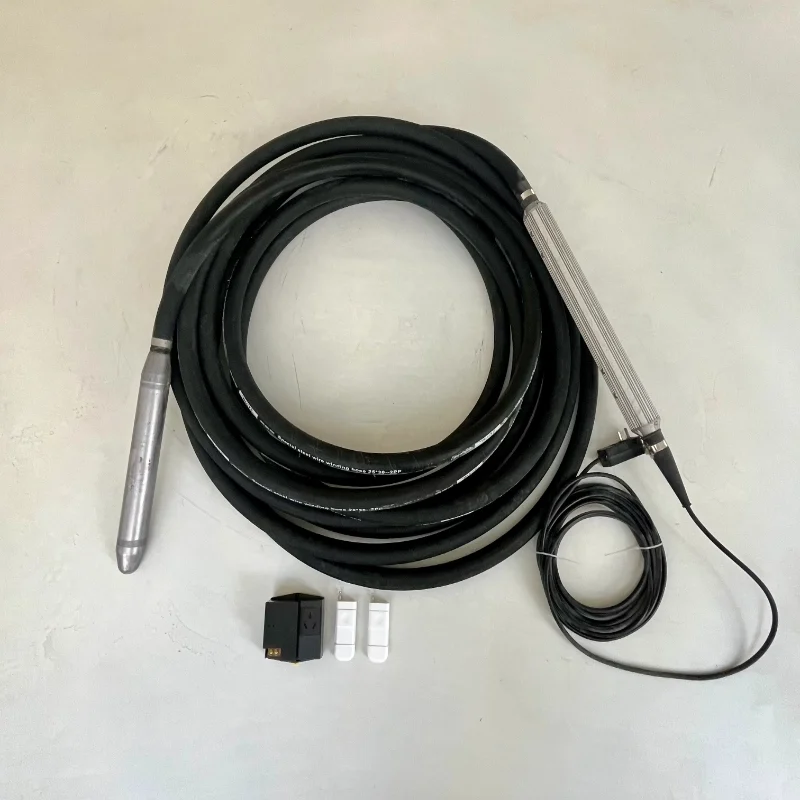
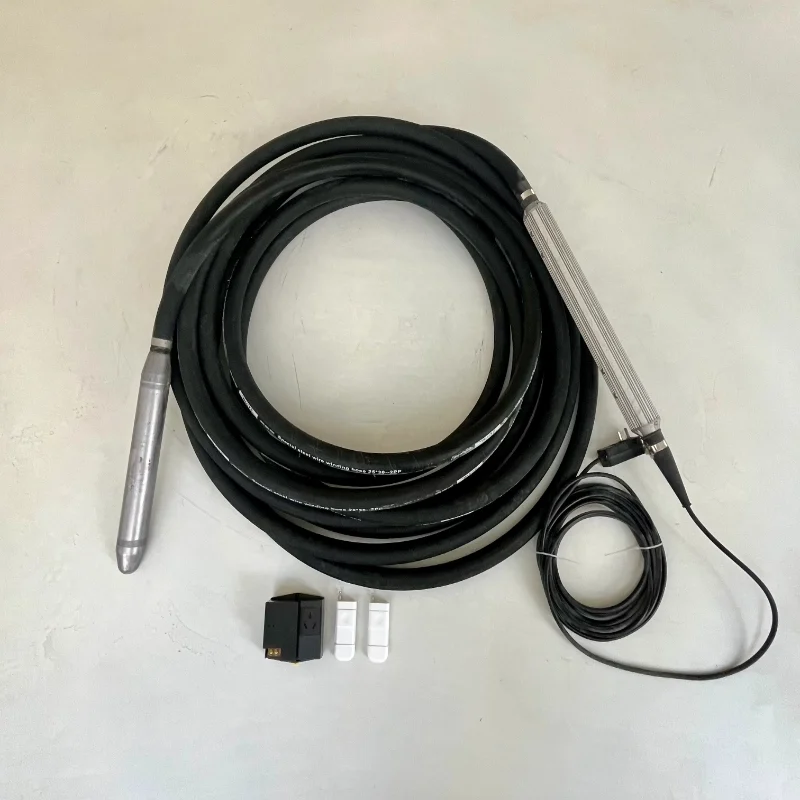
High-frequency waves create “micro-agitation” that forces tiny air pockets to coalesce and migrate upward. The result is a glass-smooth surface that requires minimal post-processing. Using a handheld high-frequency Concrete Vibrator, allows operators to target specific areas where air might be trapped, ensuring aesthetic perfection.
2. Elimination of Cold Joints and Voids
In large-scale UHPC pours, the time between batches can be a risk factor. High-frequency vibration ensures that the “knit line” between two layers of concrete disappears. By maintaining a high level of fluidity at the interface, the vibrator helps the two layers bond molecularly, eliminating the risk of structural weak points known as cold joints.
3. Optimized Microstructure Density
The durability of UHPC comes from its lack of interconnected pores. High-frequency vibration ensures the maximum packing density of the reactive powders (silica fume, cement, and quartz flour). This density is what prevents the ingress of chlorides and water, giving UHPC a service life that can exceed 100 years.
Comparative Analysis: High Frequency vs. Conventional Vibration
| Feature | Conventional Vibrator (Low/Med Freq) | High Frequency Concrete Vibrator |
| Vibrations Per Minute (VPM) | 3,000 – 8,000 | 12,000 – 18,000+ |
| Amplitude | Higher (High Displacement) | Lower (High Acceleration) |
| Effect on UHPC | Insufficient to overcome yield stress | Effectively “liquefies” the mix |
| Fiber Impact | Risk of segregation/settling | Promotes uniform distribution |
| Surface Result | Frequent “bugholes” and voids | Premium Surface Finish Quality |
Operational Best Practices for UHPC Vibration
To achieve the best results with a UHPC Construction Concrete Vibrator, contractors must follow specific protocols that differ from traditional “slump” concrete work.
Avoid Over-Vibration
Because UHPC contains specialized admixtures, over-vibrating can lead to the segregation of steel fibers. The goal is “compaction,” not “transportation.” The vibrator should be inserted vertically and withdrawn slowly (approximately 3-5 seconds per foot).
Use the Right Equipment
Handheld units are preferred for UHPC joints and complex architectural molds because they offer the portability needed to move quickly across the site. The Onnew series is specifically engineered to maintain consistent high-frequency output even when under the heavy load of a viscous UHPC mix.
Strategic Insertion Points
In UHPC construction, insertion points should be closer together than in standard concrete. Since high-frequency waves have a smaller “radius of action” but higher intensity, a grid pattern of 8-12 inches between insertions is recommended to ensure no zone is left un-compacted.
Conclusion
The synergy between Ultra-High Performance Concrete and high-frequency vibration technology is undeniable. Without the intense kinetic energy provided by a specialized UHPC Construction Concrete Vibrator, the material’s potential remains locked behind its own internal friction. By adopting high-frequency tools, engineers and contractors can guarantee not only the structural longevity of their projects but also a Surface Finish Quality that meets the highest architectural standards.
As the industry evolves, the demand for precision equipment—like those found at Onnew—will continue to grow, bridging the gap between advanced material science and practical site execution.
FAQ
1. Why can’t I use a standard 3000 VPM vibrator for UHPC?
Standard vibrators do not provide enough acceleration to overcome the high yield stress of UHPC. Using a low-frequency tool will result in poor flow, entrapped air pockets, and uneven fiber distribution, significantly compromising the strength and appearance of the concrete.
2. Does high-frequency vibration damage the steel fibers in UHPC?
No, it does not damage them. In fact, high-frequency vibration is safer for fibers than low-frequency/high-amplitude vibration. High frequency encourages the fibers to align with the flow of the concrete, which actually enhances the tensile performance of the finished structure.
3. How does vibration affect the Surface Finish Quality of architectural UHPC?
Vibration is the primary factor in determining surface aesthetics. High-frequency vibration creates a “pumping” effect on micro-bubbles, forcing them to the surface. This eliminates surface pitting and “honeycombing,” resulting in a dense, smooth, and non-porous finish that is highly resistant to staining and weathering.