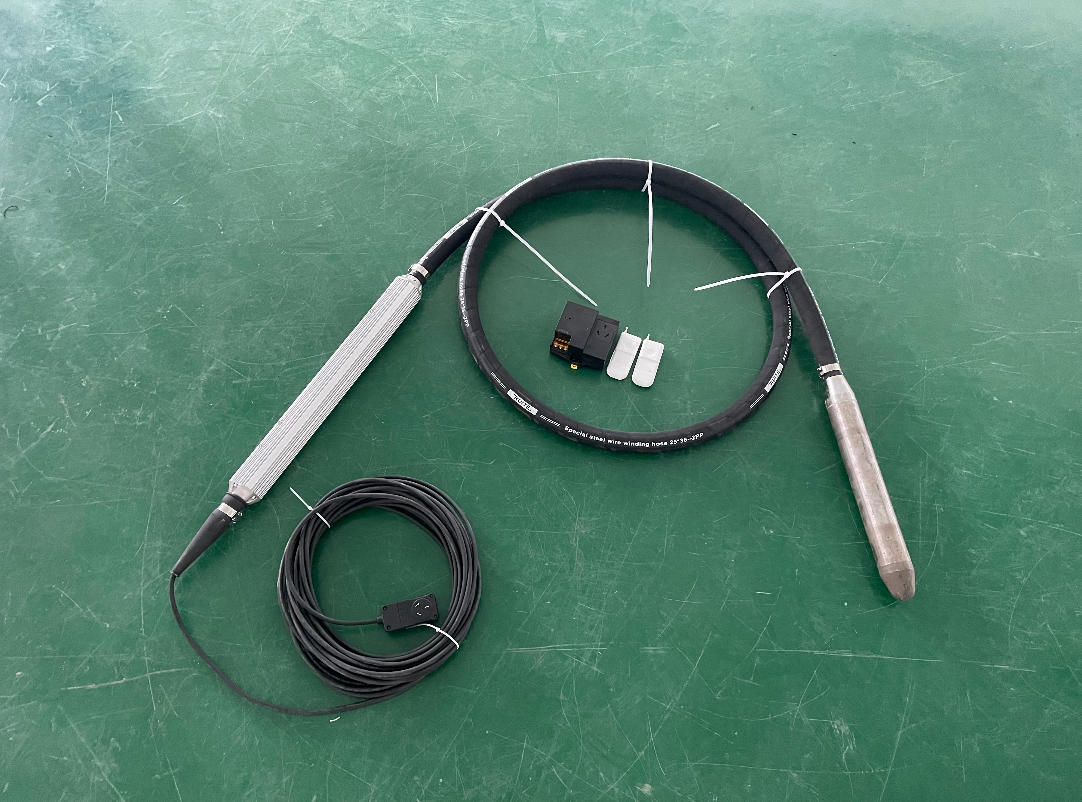
High Frequency Concrete Vibrator Applications: Solutions for Construction and Precast Concrete
Release time: 2026-10-13
High-frequency concrete vibrators are widely used in building construction and precast concrete production to improve concrete compaction, remove trapped air, and reduce honeycombing. Typical internal concrete vibrators operate at frequencies of approximately 150–200 Hz, although actual operating parameters vary by equipment design and application. They are suitable for reinforced concrete structures, precast walls, beams, columns, and other concrete components where consistent compaction is essential.
High-frequency concrete vibration technology plays an important role in modern construction and precast manufacturing. From building foundations to prefabricated concrete components, proper vibration helps improve concrete density, surface quality, and production consistency. Understanding different applications and equipment requirements allows contractors and manufacturers to select more suitable vibration solutions.
Table of Contents
What Are the Main Applications of High-Frequency Concrete Vibrators in Building Construction?
In building construction, high-frequency concrete vibrators are mainly used to compact freshly poured concrete and improve structural consistency.
Typical applications include:
- Building foundations: Remove trapped air from concrete foundations and improve concrete compaction.
- Reinforced concrete columns: Help concrete flow around steel reinforcement and reduce honeycombing.
- Concrete beams and slabs: Improve concrete density and surface quality during pouring.
- Walls and structural components: Support uniform compaction in narrow or heavily reinforced sections.
Internal concrete vibrators are particularly suitable for applications where the vibrating head can be inserted directly into fresh concrete.
How Are High-Frequency Concrete Vibrators Used in Precast Concrete Production?
Precast concrete manufacturing requires consistent production quality because components are produced repeatedly using standardized molds.
High-frequency concrete vibration equipment can be used in several precast applications:
| Precast Product | Vibration Application | Main Purpose |
|---|---|---|
| Precast concrete walls | Internal or external vibration | Reduce air pockets and improve surface quality |
| Precast concrete beams | Internal vibration | Compact concrete around reinforcement |
| Precast concrete piles | Internal or external vibration | Improve concrete density |
| Precast concrete panels | Formwork vibration | Support uniform mold filling and compaction |
| Precast concrete pipes | External vibration | Improve concrete consolidation within molds |
For precast production, external formwork vibrators are particularly useful when internal vibrator insertion is difficult. They transfer vibration through the mold to compact the concrete mixture.
What Technical Parameters Should Buyers Consider?
Selecting the right high-frequency concrete vibrator requires evaluating several technical parameters.
According to the application ranges presented in ACI 309R guidance, internal vibrators with 30–65 mm heads typically operate around 140–210 Hz, while models with 50–90 mm heads commonly operate around 130–200 Hz. These are reference ranges rather than universal requirements. Actual selection depends on concrete workability, reinforcement density, and structural dimensions.
Key selection factors include:
- Vibration frequency: Determines the vibration cycles generated by the equipment.
- Vibrating head diameter: Smaller heads are useful in narrow spaces and dense reinforcement.
- Amplitude and centrifugal force: Affect the effective consolidation range.
- Motor power: Should match the required operating conditions.
- Inverter compatibility: Ensures stable power supply and suitable operating frequency.
Buyers should evaluate these parameters together rather than selecting equipment based on frequency alone.
How Can Manufacturers Improve Concrete Compaction Efficiency?
Proper equipment operation and production management are essential for consistent results.
For construction projects, operators should insert the vibrator at appropriate intervals, maintain sufficient vibration time, and withdraw it slowly. Excessive vibration should be avoided because it may cause aggregate segregation.
For precast manufacturers, vibration intensity, mold structure, concrete mix consistency, and vibration duration should be tested together. Trial production is particularly useful when determining the positioning and spacing of external vibrators. mineralproducts.
Regular inspection of the vibrating head, cables, motor, and inverter also helps maintain equipment reliability and reduce unexpected downtime.
Why Choose ONNEW for High-Frequency Concrete Vibration Solutions?
Choosing a professional concrete vibration equipment supplier is important for construction contractors and precast manufacturers seeking stable production performance.
ONNEW specializes in high-frequency concrete vibration equipment, focusing on motor-in-head technology, high-frequency vibration systems, and proprietary inverter technology. With more than 20 patents and continuous product development, ONNEW provides equipment solutions for different concrete compaction requirements.
Whether used in building foundations, reinforced concrete columns, precast walls, beams, or concrete panels, ONNEW can help customers evaluate suitable equipment configurations according to their production processes and application requirements.
If you are looking for a reliable high-frequency concrete vibrator manufacturer, contact ONNEW to discuss your project requirements and explore professional concrete vibration solutions.