Electronic Internal Concrete Vibrator: How a 20 m Hose Changes Concrete Vibration Work
Release time: 2026-08-24
Table of Contents
On most concrete equipment specifications, buyers usually focus on power, vibration frequency, or head diameter. However, during real construction operations, another factor often determines whether equipment works smoothly on site: working reach.
For contractors handling large foundations, wide slabs, infrastructure projects, or precast production, the challenge is not only achieving proper concrete consolidation. It is also reaching different vibration points without constantly moving equipment around the jobsite.
Every unnecessary equipment adjustment can interrupt the pouring sequence.

That is why an Electronic Internal Concrete Vibrator system with an extended hose design provides practical value.
With a focus on practical construction requirements and flexible equipment design, ONNEW develops Electronic Internal Concrete Vibrators and other concrete vibration solutions that help professionals handle different working environments more efficiently.
Instead of being limited by short working distances, it gives operators more flexibility when working across larger concrete areas.
When Working Distance Becomes a Real Construction Challenge
Concrete pouring environments are rarely simple.
Some projects have:
- Large casting areas;
- Limited power access points;
- Deep structural sections;
- Dense reinforcement layouts;
- Multiple mould positions in precast production.
In these situations, equipment mobility becomes an important consideration.
A standard vibrator configuration may work well for small or easily accessible projects. However, larger working areas often require a system that allows operators to cover more distance without repeatedly relocating the equipment.
A 20 m rubber tube changes this process.
For construction teams, additional reach means:
- More flexibility during concrete placement;
- Easier access to different vibration points;
- Reduced equipment repositioning;
- Better adaptation to complex jobsite layouts.
The value of a longer hose is not only measured in metres.
It is measured in how easily equipment fits into the actual workflow.
A High-Frequency Electric System Designed for Practical Applications
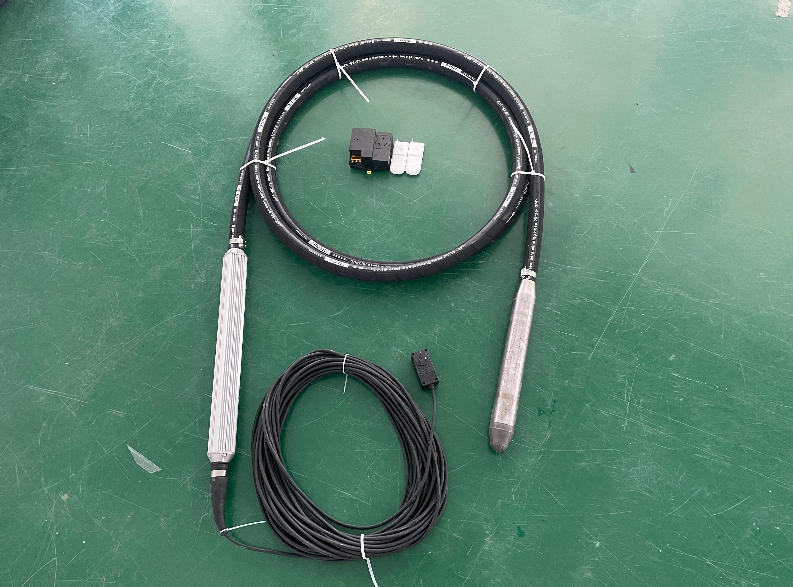
The High-Frequency Internal Concrete Vibrator combines an electric vibration structure with an extended working configuration for professional concrete applications.
The system includes:
- High-frequency vibration components;
- A durable rubber tube;
- An integrated inverter structure.
For the Concrete Construction Vibrator Electric Poker for Concrete configuration, the main specifications include:
| Parameter | Specification |
| Rubber Tube Length | 20 m |
| Head Length | 0.4 m |
| Inverter Length | 0.5 m |
For buyers, these specifications reflect practical application advantages:
- The 20 m rubber tube supports wider working coverage;
- The compact head design allows flexible insertion into fresh concrete;
- The integrated inverter structure helps create a more organized equipment setup.
When selecting a concrete vibrator, working flexibility is often as important as vibration capability.
Why an Electronic Internal Vibrator Fits Modern Construction Needs
An Internal Concrete Vibrator works by inserting the vibrating head directly into fresh concrete to support internal consolidation.
However, different construction environments require different equipment characteristics.
A contractor working on a small building project may prioritize portability.
A precast manufacturer may focus on repeatable operation.
A large infrastructure contractor may need equipment that can reach further working areas.
The Electric Internal Vibrating System provides a flexible approach by combining electric operation with an extended hose configuration.
This allows operators to focus on concrete placement instead of spending additional time moving equipment between locations.
The Practical Benefits of a 20 m Rubber Tube
A 20 m hose is not simply a specification listed in a catalogue.
It changes how equipment can be used on site.
Large Foundation Projects
For deep foundations and large structural pours, power sources are not always positioned close to every working area.
A longer hose allows operators to access more sections without frequent equipment movement.
For construction teams, this means fewer interruptions during continuous concrete placement and improved flexibility when working across larger structures.
Wide Slabs and Industrial Floors
During large-area concrete placement, maintaining a consistent working rhythm is important.
Extended reach helps operators cover more areas from a suitable operating position.
For industrial floors, commercial buildings, and large concrete surfaces, equipment flexibility can influence how efficiently the vibration process is completed.
Precast Concrete Production
Precast factories often handle multiple moulds and repeated casting processes.
A flexible Long-Hose Concrete Vibrator System can support different production layouts and working arrangements.
For manufacturers, equipment that adapts to different mould positions can help create a more organized production workflow.
Complex Reinforced Structures
Dense reinforcement can make equipment positioning more challenging.
A longer working range allows operators to approach difficult areas with greater flexibility.
In reinforced concrete applications, the ability to reach different sections without frequent repositioning can help improve daily operation efficiency.
A More Convenient Approach to Internal Concrete Vibration
For equipment buyers, the question is not only:
“Can this vibrator perform vibration work?”
The more important question is:
“Can this equipment fit our working environment?”
The Electronic Internal Vibrator is designed around this practical consideration.
Its extended hose configuration helps support:
- Flexible equipment positioning;
- Easier operation around formwork;
- Better access in large working areas;
- Reduced dependence on frequent equipment relocation.
For contractors and distributors, these details influence daily usability and long-term equipment value.
Where This Internal Concrete Vibration Equipment Fits in a Construction Fleet
This type of vibrator is not designed to replace every concrete vibration tool.
Instead, it fills a specific requirement: projects where working distance and flexibility matter.
Typical applications include:
- Building foundations;
- Bridge and infrastructure construction;
- Industrial concrete floors;
- Precast concrete production;
- Large reinforced concrete structures.
For contractors, it provides an additional option for challenging working conditions.
For distributors, it offers a product configuration that addresses customers looking for extended working range.
What Buyers Should Consider Before Choosing a Concrete Vibrator
When purchasing an Electronic Internal Concrete Vibrator, professional buyers usually evaluate several factors:
| Consideration | Importance |
| Hose Length | Determines working coverage and flexibility |
| Head Design | Influences operation in different concrete conditions |
| Equipment Structure | Affects daily handling and storage |
| Application Range | Determines project suitability |
| Supplier Support | Important for long-term cooperation |
A suitable concrete vibrator is not always the one with the highest specification.
It is the one that matches the project environment.
For professional buyers, understanding how equipment characteristics connect with actual construction conditions is often more important than comparing individual specifications alone.
Designed for Flexible Concrete Operations
Concrete vibration is only one stage of the construction process, but it plays an important role in achieving consistent results.
For contractors, precast manufacturers, and equipment distributors, choosing the right equipment means finding a balance between performance, flexibility, and practical operation.
With its 20 m rubber tube, compact head design, and integrated inverter structure, the High-Frequency Concrete Vibration Equipment provides a practical option for professional internal concrete vibration applications.
The biggest advantage is simple:
More working reach, fewer unnecessary equipment movements, and greater flexibility during demanding concrete projects.
With a focus on intelligent high-frequency vibration technology and practical construction applications, ONNEW provides Electronic Internal Concrete Vibrators and other concrete vibration solutions designed to support contractors, precast manufacturers, and equipment distributors with more flexible and efficient jobsite operation.
FAQ
1. What is an Electronic Internal Vibrator?
An Electronic Internal Vibrator is a concrete vibration system designed for internal concrete consolidation using an electric high-frequency structure.
It helps transfer vibration energy directly into fresh concrete, supporting more effective consolidation during construction operations.
2. What is the advantage of a 20 m rubber tube?
A 20 m rubber tube provides extended working reach, allowing operators to access larger concrete areas with fewer equipment repositioning steps.
This is especially useful for large foundations, wide slabs, infrastructure projects, and complex construction layouts.
3. What applications use an Internal Concrete Vibrator?
Internal concrete vibrators are commonly used in:
Foundations;
Reinforced concrete structures;
Precast production;
Concrete slabs;
Infrastructure projects.
The suitable equipment configuration depends on the concrete conditions and project requirements.
4. Why is hose length important when selecting a concrete vibrator?
Hose length affects working flexibility, equipment positioning, and how easily operators can reach different concrete placement areas.
For large-scale projects, a longer hose can reduce unnecessary equipment movement and improve workflow efficiency.
5. Who typically uses this type of equipment?
It is suitable for:
Construction contractors;
Precast manufacturers;
Infrastructure companies;
Concrete specialists;
Professional equipment distributors.